Why Merchant Exporters Are the Most Suitable Supply Partners for International Buyers
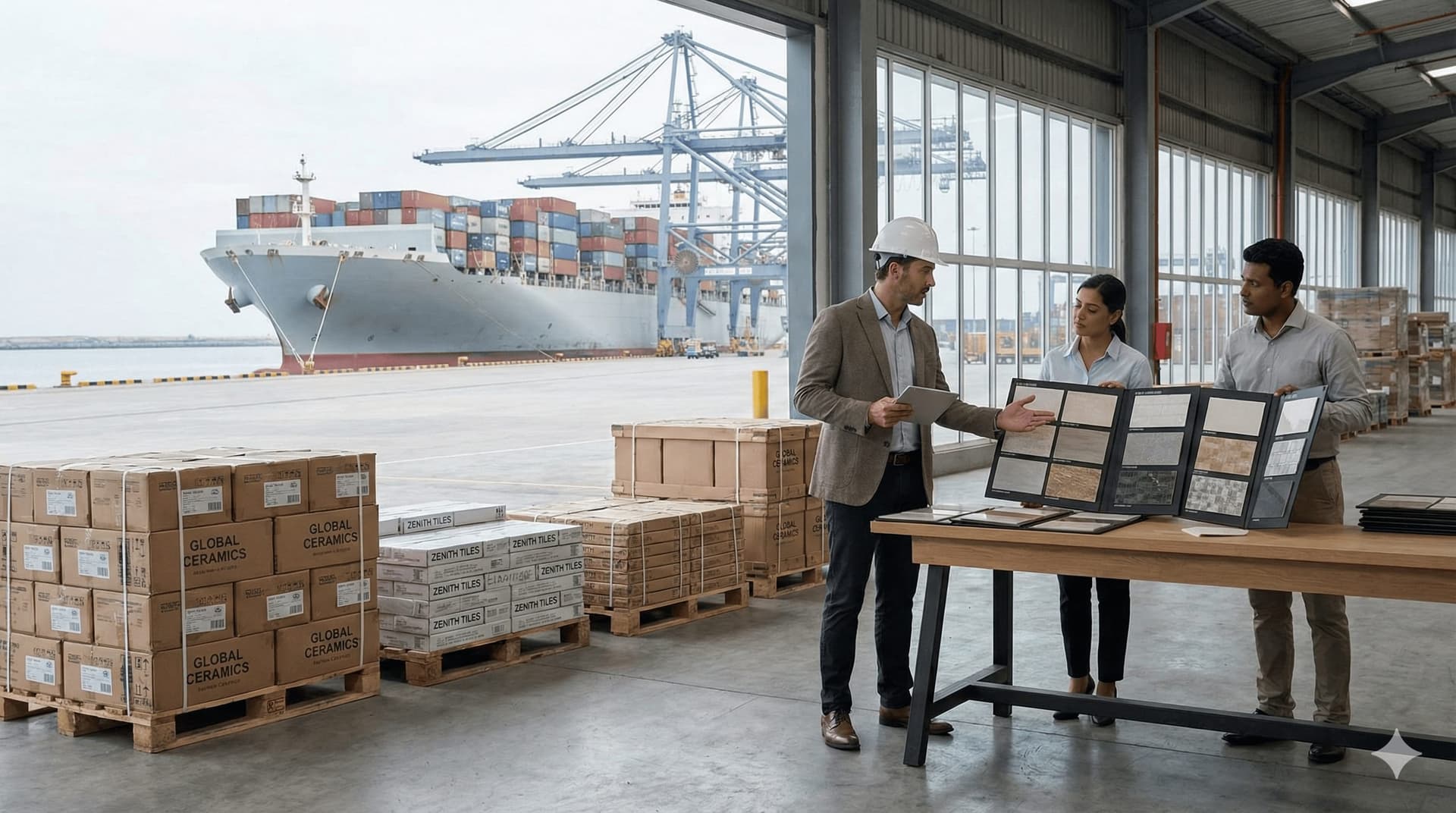
In international trade, choosing the right supply partner matters as much as choosing the right product.
When importing ceramic tiles, buyers typically encounter three types of suppliers: factory owners, traders, and merchant exporters. While each plays a role in the supply chain, merchant exporters have emerged as the most reliable and flexible partners for international buyers—especially those seeking consistency, scalability, and risk control.
This article explains why merchant exporters are often the best fit for global tile buyers and how they add value beyond manufacturing.
1. What Is a Merchant Exporter?
A merchant exporter does not rely on a single factory. Instead, they work with multiple vetted manufacturers, managing sourcing, quality checks, packing, logistics, and documentation under one export system.
They act as a supply chain integrator, not just a reseller.
Annotation:
Merchant exporters sell reliability, not just products.
2. Flexibility in Product Range and Volume
International buyers rarely source from just one factory.
Merchant exporters can:
- Offer multiple sizes, finishes, and designs
- Combine products from different factories in one container
- Adjust volumes based on demand
This flexibility is especially valuable for distributors managing diverse markets.
3. Reduced Supply Risk
Depending on a single factory creates vulnerability.
Merchant exporters reduce risk by:
- Shifting production between factories when needed
- Avoiding downtime due to factory issues
- Ensuring continuity during high-demand periods
Annotation:
Supply resilience is a hidden advantage in global trade.
4. Consistent Quality Control Across Factories
Quality inconsistency is one of the biggest challenges in tile imports.
Professional merchant exporters implement:
- Standardized quality benchmarks
- Pre-shipment inspections
- Batch and shade control systems
This ensures consistency even when sourcing from multiple production units.
5. Strong Export-Grade Packing and Logistics Expertise
Merchant exporters are export specialists.
They focus on:
- Export-grade packing standards
- Container optimization
- Breakage control
- Compliance with weight and handling regulations
Annotation:
Export experience reduces port-level surprises.
6. Documentation and Compliance Management
Incorrect documentation causes delays, penalties, and lost trust.
Merchant exporters handle:
- Commercial invoices and packing lists
- Bills of lading
- Certificates of origin
- Market-specific compliance requirements
This allows buyers to focus on sales instead of paperwork.
7. Better Alignment with Buyer Needs
Factories are production-focused.
Merchant exporters are buyer-focused.
They:
- Understand market-specific preferences
- Recommend suitable products
- Adapt to buyer feedback
- Support private label programs
Annotation:
Merchant exporters translate market demand into factory execution.
8. Support for Private Label and Brand Building
Private labeling requires consistency, confidentiality, and coordination.
Merchant exporters support:
- Custom packaging
- Brand-specific SKUs
- Long-term product planning
- Quality repeatability
This makes them ideal partners for buyers building their own brands.
9. Simplified Communication and Accountability
Working with multiple factories can mean fragmented communication.
Merchant exporters offer:
- Single-point coordination
- Faster response times
- Clear accountability
When issues arise, buyers know exactly who is responsible.
10. Long-Term Partnership Orientation
Merchant exporters succeed through repeat business, not one-off deals.
They invest in:
- Relationship building
- Process improvement
- Buyer success
This creates stable, long-term partnerships rather than transactional exchanges.
Final Thought
International buyers don’t just need suppliers—they need systems.
Merchant exporters provide flexibility, consistency, and export discipline that most factories and traders cannot offer alone. For buyers navigating complex global markets, this makes merchant exporters the most suitable supply partners.
In global tile trade, reliability scales better than capacity.
Conclusion
Merchant exporters bridge the gap between factories and global buyers. By combining sourcing flexibility, quality control, logistics expertise, and market understanding, they reduce risk and improve efficiency. For international tile buyers seeking stability and growth, merchant exporters offer a smarter supply model.