Why Importers Prefer Merchant Exporters Over Manufacturers in International Business
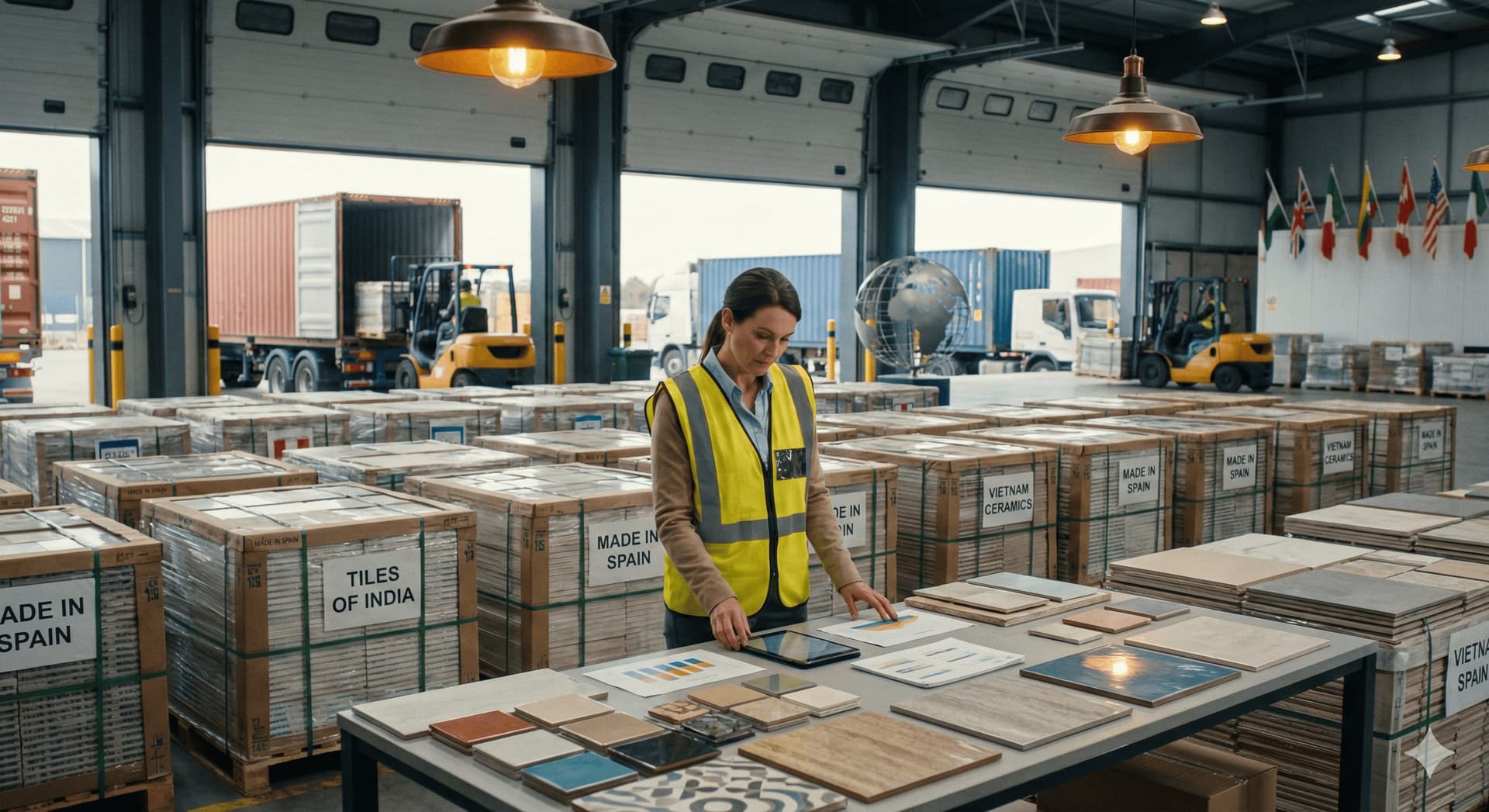
In international trade, the choice of supplier is not just a procurement decision—it is a strategic decision about risk, flexibility, speed, and market fit.
While manufacturers are the backbone of production, many importers across industries—especially in design-driven sectors like ceramic tiles—often prefer working with merchant exporters.
Why? Because global trade is less about who makes the product, and more about who can deliver the right product, at the right time, in the right mix, with the least risk.
Let’s explore the economics and strategic logic behind this preference.
Understanding the Two Models
Before diving deeper, it’s important to clarify the difference.
Annotation:
Manufacturer Exporter produces goods in their own factory and sells directly to international buyers.
Merchant Exporter sources products from multiple factories and exports them under one coordinated system.
Both have advantages. But their value changes depending on the importer’s business model.
1. Product Variety and Portfolio Advantage
A manufacturer usually offers a limited range—specific sizes, finishes, and designs that they produce.
A merchant exporter offers a multi-factory portfolio.
This means an importer can:
- Source multiple designs in one order
- Cover different price segments
- Serve multiple customer preferences
Business Impact: One container can serve multiple market segments instead of one.
2. Lower MOQ and Flexible Buying
Manufacturers prefer high production volumes per design for efficiency.
Merchant exporters provide low MOQ flexibility by combining products from multiple factories.
Annotation:
MOQ (Minimum Order Quantity) is the minimum quantity a supplier requires per product.
This allows importers to:
- Test new designs with lower risk
- Avoid overstocking
- Maintain faster inventory turnover
3. Container Optimization and Freight Economics
Shipping costs depend heavily on how efficiently a container is filled.
Merchant exporters specialize in:
- Mixing sizes and designs
- Adjusting packing ratios
- Maximizing container utilization
Result: Lower landed cost per square meter or unit
A single manufacturer cannot always provide such mix optimization.
4. Faster Lead Time and Availability
If a manufacturer does not have ready stock, production must be scheduled.
Merchant exporters can:
- Source ready material from multiple factories
- Offer alternative designs instantly
- Combine stock-based and made-to-order products
This reduces waiting time and keeps supply chains moving.
5. Market-Oriented Product Selection
Manufacturers focus on what they produce.
Merchant exporters focus on what sells in your market.
They understand:
- Regional design preferences
- Price sensitivity
- Dealer demand patterns
This reduces the importer’s risk of slow-moving inventory.
6. Single Point of Coordination
International sourcing involves multiple processes:
- Factory communication
- Quality inspection
- Packaging
- Documentation
- Container loading
Merchant exporters manage all of this under one system.
Business Benefit: Importers deal with one partner instead of coordinating with multiple factories.
7. Additional Quality Control Layer
Reliable merchant exporters perform their own inspections before shipment.
They ensure:
- Shade consistency
- Proper packing
- Export-grade labeling
- Damage prevention
This reduces post-shipment claims and disputes.
8. Risk Diversification
Relying on a single manufacturer creates dependency risk.
If that factory faces:
- Production delays
- Machinery breakdown
- Raw material issues
The entire shipment is affected.
Merchant exporters diversify sourcing across factories, reducing operational risk.
9. Pricing Flexibility
Manufacturers usually follow fixed price structures.
Merchant exporters can:
- Compare prices across factories
- Blend product mix based on budget
- Offer competitive market-aligned pricing
This helps importers target multiple customer segments.
10. Better Support for New Importers
For new buyers, international sourcing can be complex.
Merchant exporters provide guidance on:
- Product selection
- Container planning
- Documentation
- Market-friendly SKUs
They act as trade facilitators, not just suppliers.
When Manufacturer Exporters Are the Better Choice
To maintain balance, manufacturers are ideal in certain situations:
- When you need large volume of a single product
- When you require exclusive or custom designs
- When demand is stable and predictable
- When long-term contracts are established
In these cases, direct sourcing can increase margins.
The Core Trade-Off
This decision comes down to a simple economic equation:
Manufacturer → Higher margin per product
Merchant Exporter → Higher flexibility + faster inventory rotation
In most global trading environments:
Speed of selling and cash rotation often generates more profit than higher margin on slow stock.
Final Thought
In international business, success is not defined by buying the cheapest product—it is defined by how efficiently you convert inventory into cash.
Merchant exporters help importers:
- Reduce risk
- Increase flexibility
- Improve turnover
- Simplify operations
That is why, across industries like ceramic tiles, textiles, and building materials, merchant exporters play a powerful and often underestimated role.
They are not just intermediaries.
They are supply chain strategists enabling faster, smarter global trade.