Why Ceramic Tile Shipments Fail at Port — And How Importers Prevent It
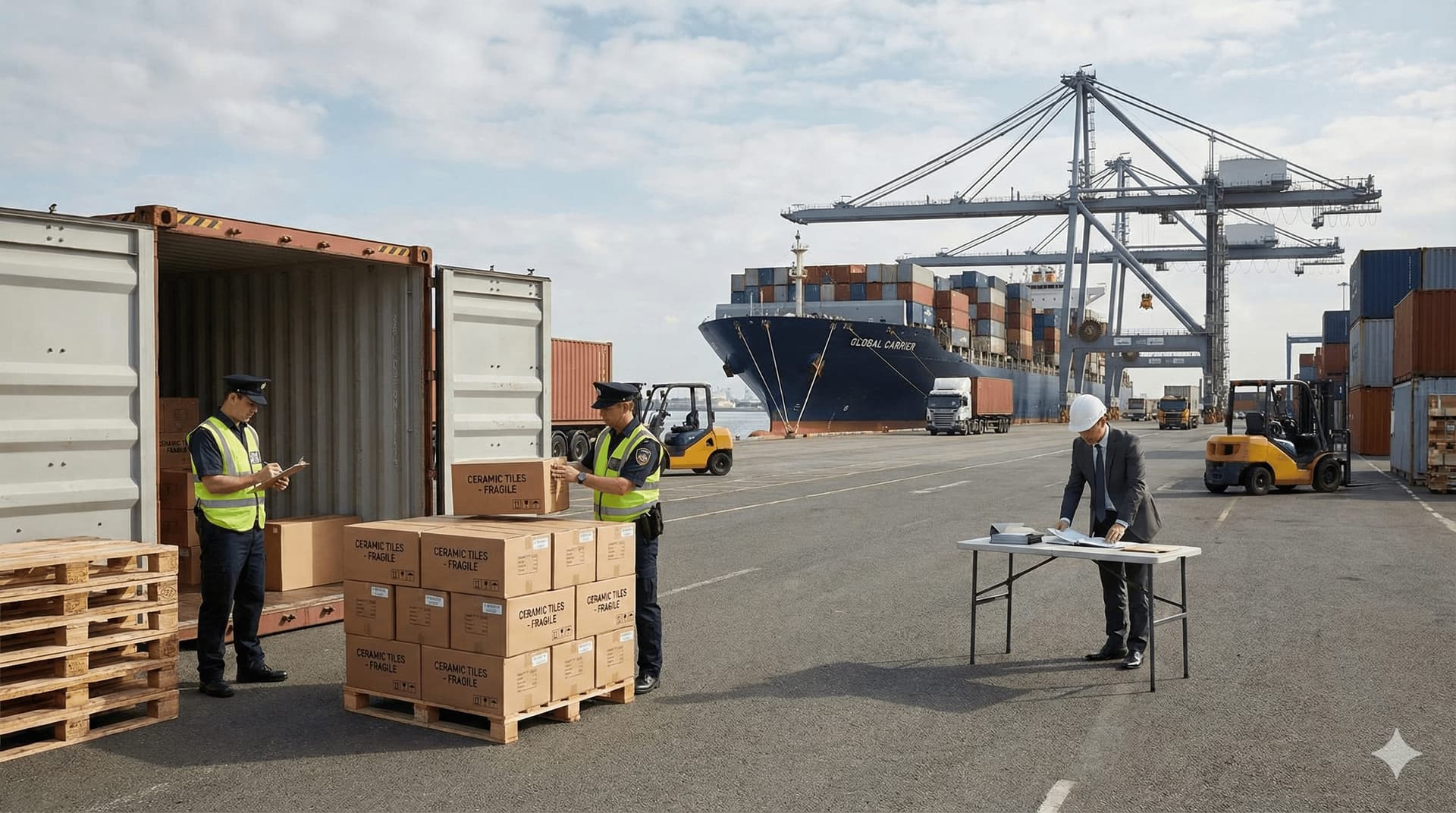
Ceramic tile imports rarely fail because of design or price.
They fail at the port—quietly, expensively, and often unexpectedly.
Containers get held. Documents don’t match. Tiles arrive broken. Shades differ from samples. What looked like a profitable shipment turns into storage charges, project delays, and damaged buyer trust.
Experienced importers know this reality:
Port-level failures are not accidents. They are preventable mistakes.
This article breaks down the most common reasons ceramic tile shipments fail at port—and how professional importers avoid them.
1. Incorrect or Incomplete Export Documentation
Documentation errors are the leading cause of shipment delays.
Common issues include:
- Mismatch between invoice and packing list
- Incorrect HS codes
- Missing certificates of origin
- Incomplete consignee or notify party details
Why it fails at port:
Customs authorities rely entirely on paperwork. Even a small discrepancy can trigger inspection or hold.
Annotation:
Experienced importers cross-check documents before vessel departure, not after arrival.
How importers prevent it
- Work only with exporters experienced in destination-country compliance
- Request document drafts before originals are issued
- Ensure consistency across all documents
2. Poor Packing Leading to Breakage Claims
Tiles don’t usually break in factories. They break during transit.
Weak cartons, improper palletization, or poor container stuffing result in damaged goods discovered only after de-stuffing.
Why it fails at port:
Severe breakage can lead to rejection, insurance disputes, or delayed clearance.
Annotation:
Breakage claims are harder to prove once containers are opened at destination.
How importers prevent it
- Insist on export-grade cartons and palletized loading
- Request container stuffing photos or videos
- Avoid suppliers who treat packing as an afterthought
3. Shade Variation and Batch Mixing Issues
Shade mismatch is one of the most expensive tile-import mistakes.
Tiles from different batches may look identical in cartons but differ visibly after installation.
Why it fails at port:
Importers often discover batch mixing only after inspection or partial unloading, leading to disputes and returns.
Annotation:
Ports don’t reject shipments for shade issues—projects do.
How importers prevent it
- Demand batch-wise supply for project orders
- Ensure shade and caliber markings on cartons
- Confirm single-batch production for large quantities
4. Incorrect Weight Declarations
Ceramic tiles are heavy. Even small miscalculations matter.
Errors in net or gross weight declarations can cause:
- Overweight containers
- Port penalties
- Re-stuffing orders
Why it fails at port:
Ports enforce strict weight limits for safety and compliance.
Annotation:
Weight mismatches often surface only during terminal handling.
How importers prevent it
- Confirm container weight calculations in advance
- Use exporters who understand container load limits
- Avoid over-optimized loading that ignores regulations
5. Non-Compliance with Destination Standards
Different markets have different technical and regulatory requirements.
Missing test reports, non-compliant labeling, or incorrect standards can stop a shipment from clearing.
Why it fails at port:
Customs or inspection authorities may require proof of compliance before release.
Annotation:
Compliance issues are more common in developed markets.
How importers prevent it
- Verify destination-specific requirements in advance
- Request test reports from recognized laboratories
- Ensure product specs match declared standards
6. Poor Coordination Between Exporter, Freight Forwarder, and Importer
A shipment involves multiple parties. When communication breaks, errors multiply.
Why it fails at port:
Late filings, incorrect BL details, or miscommunication cause clearance delays.
Annotation:
Most port failures are coordination failures.
How importers prevent it
- Work with exporters who coordinate logistics end-to-end
- Stay copied on critical shipping communications
- Confirm BL details immediately upon issuance
7. No Clear Claim or Resolution Process
When something goes wrong, unprepared suppliers disappear.
Disputes escalate when there’s no predefined process for handling claims.
Why it fails at port:
Unresolved issues delay clearance, storage, and onward transport.
Annotation:
A supplier’s response speed matters more than the mistake itself.
How importers prevent it
- Clarify claim procedures before ordering
- Work with suppliers experienced in dispute handling
- Document everything from packing to delivery
Final Insight: Port Failures Are Management Failures
Ports don’t create problems.
They reveal them.
Successful ceramic tile importers treat shipments as risk-managed operations, not simple purchases. They prioritize documentation accuracy, packing standards, batch control, compliance, and communication.
Price attracts attention.
Preparation protects profit.
A shipment that clears smoothly is not luck—it’s planning.
Conclusion
Ceramic tile shipments fail at port for predictable reasons: paperwork gaps, packing weaknesses, compliance oversights, and poor coordination. Importers who understand these risks—and work with exporters who do too—avoid costly delays and protect long-term business relationships.
In international tile trade, success isn’t measured at the factory gate.
It’s confirmed at the port.