Which Tile Works in Which Market? A Smart Buyer’s Guide
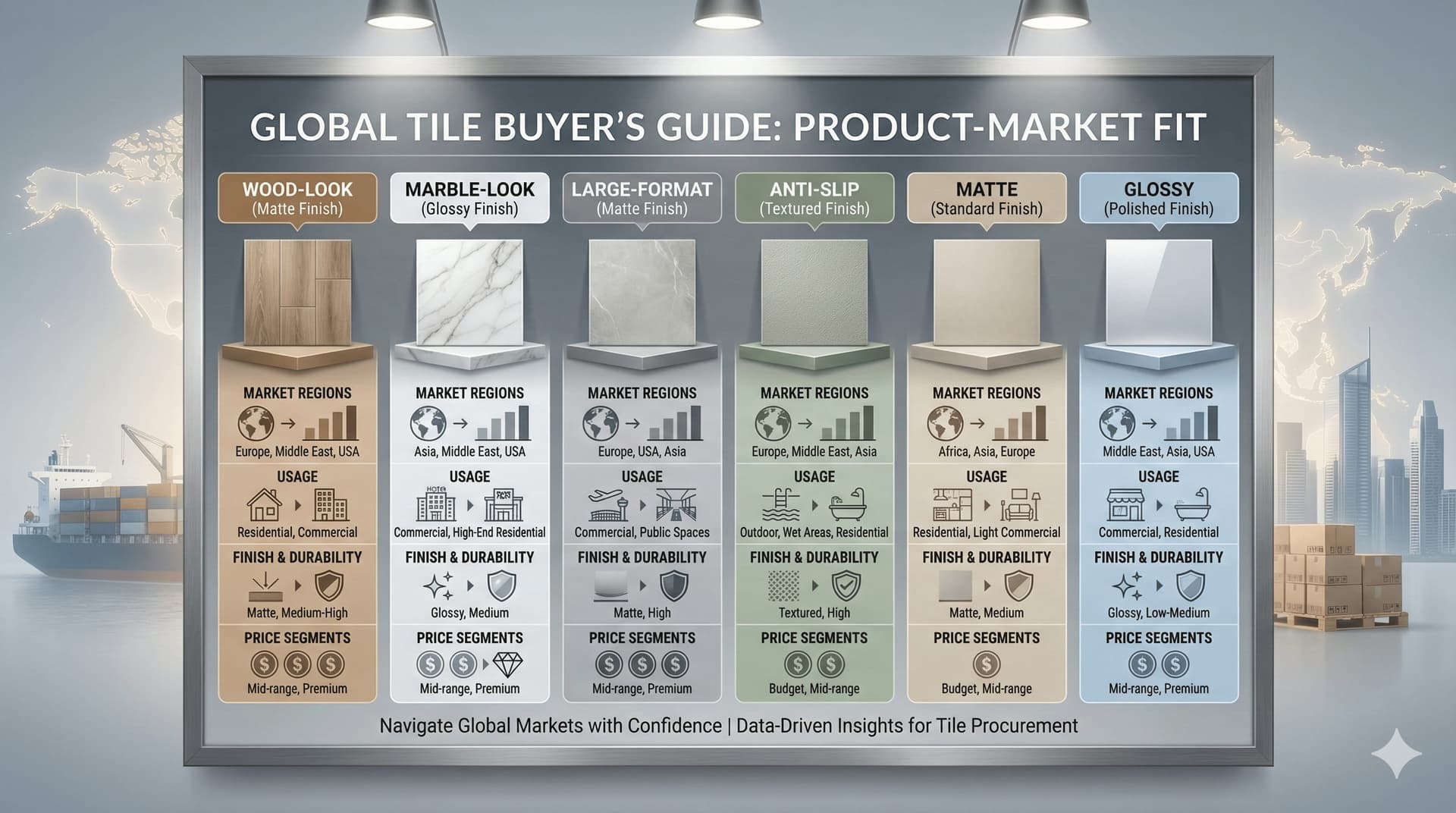
Ceramic tiles are sold globally—but they are not bought for the same reasons everywhere.
What works in one country may fail in another. Some markets prioritize price, others demand premium finishes. Some require high durability, while others focus on aesthetics. Smart buyers don’t just choose tiles—they match tile types to market behavior.
This guide explains how different tile types perform in different markets, helping buyers and importers align product selection with demand, pricing expectations, and usage patterns.
1. Budget Tiles: High Volume, High Competition Markets
These tiles are typically:
- Smaller sizes
- Basic finishes
- Simple designs
- Cost-focused
Where they work best:
- Africa
- Parts of Southeast Asia
- Rural or semi-urban markets
Why they sell:
- Large housing demand
- Government infrastructure projects
- Price-sensitive buyers
Annotation:
In these markets, consistency and packing quality matter more than premium appearance.
2. Mid-Range Tiles: Balance of Price and Design
Mid-range tiles combine affordability with improved aesthetics.
They usually feature:
- Wood-look or stone-look designs
- Standard large formats
- Matte or satin finishes
Where they work best:
- Middle East
- Latin America
- Eastern Europe
Why they sell:
- Growing middle class
- Residential and retail construction
- Renovation projects
Annotation:
These markets often want “premium look at reasonable price.”
3. Premium Tiles: Design-Led Markets
Premium tiles focus on:
- Large formats
- Polished or high-gloss finishes
- Unique textures
- Digital printing
Where they work best:
- Western Europe
- Australia
- High-end Middle East segments
- North America
Why they sell:
- Design-conscious buyers
- Luxury residential and hospitality
- Brand perception
Annotation:
In premium markets, inconsistency damages brand trust quickly.
4. Large-Format Tiles: Modern Architecture Markets
Large-format tiles (600×1200 mm and above) are increasingly popular.
Where they work best:
- Urban Asia
- Middle East
- Europe
- High-end Africa
Why they sell:
- Seamless appearance
- Minimal grout lines
- Modern interiors
Annotation:
Large formats require export-grade packing and careful container loading.
5. Wood-Look Tiles: Natural Aesthetic Markets
Wood-look tiles offer warmth without maintenance issues.
Where they work best:
- Europe
- USA
- Canada
- Japan
Why they sell:
- Hygienic
- Water-resistant
- Long-lasting
Annotation:
These markets care deeply about texture realism and surface feel.
6. Anti-Slip and Outdoor Tiles: Utility-Driven Markets
These tiles focus on:
- Safety
- Rough surfaces
- Functional finishes
Where they work best:
- Middle East
- Coastal regions
- Public infrastructure projects
Why they sell:
- High foot traffic
- Safety regulations
- Climate conditions
7. High-Durability Commercial Tiles
Designed for heavy usage:
- Shopping malls
- Airports
- Hospitals
- Schools
Where they work best:
- Urban Africa
- Southeast Asia
- Middle East
Annotation:
Commercial buyers value performance more than appearance.
8. Glossy vs Matte: Market Preferences
Glossy tiles work well in:
- Middle East
- South Asia
- Luxury segments
Matte tiles perform better in:
- Europe
- Japan
- Scandinavian countries
Annotation:
Gloss = glamour. Matte = minimalism. Choose accordingly.
9. Climate Matters More Than You Think
Climate affects tile demand.
Hot and humid regions prefer:
- Cool-touch surfaces
- Light shades
- Easy-to-clean finishes
Cold regions prefer:
- Insulating textures
- Natural-look surfaces
- Warm tones
10. Why Smart Buyers Don’t Choose Tiles—They Choose Markets
Professional buyers start with the market, not the product.
They ask:
- Who is my end customer?
- What price point works?
- What installation environment exists?
- What design preferences dominate?
Then they choose tiles accordingly.
Annotation:
Wrong tile in the right market fails. Right tile in the wrong market fails faster.
Final Thought
Tiles don’t sell themselves.
Markets decide what sells.
The smartest buyers don’t chase trends—they match tile types to real demand. By understanding market behavior, climate, income levels, and construction patterns, buyers protect margins and avoid unsold stock.
In global trade, selection is strategy.
Conclusion
Choosing the right tile is not a design decision—it’s a market decision. Buyers who understand regional preferences, usage patterns, and price sensitivity build stronger businesses. Exporters who help buyers make these choices become long-term partners.
The right tile in the right market doesn’t just sell.
It scales.