What Size Will Lead the Future of Ceramic Tiles?
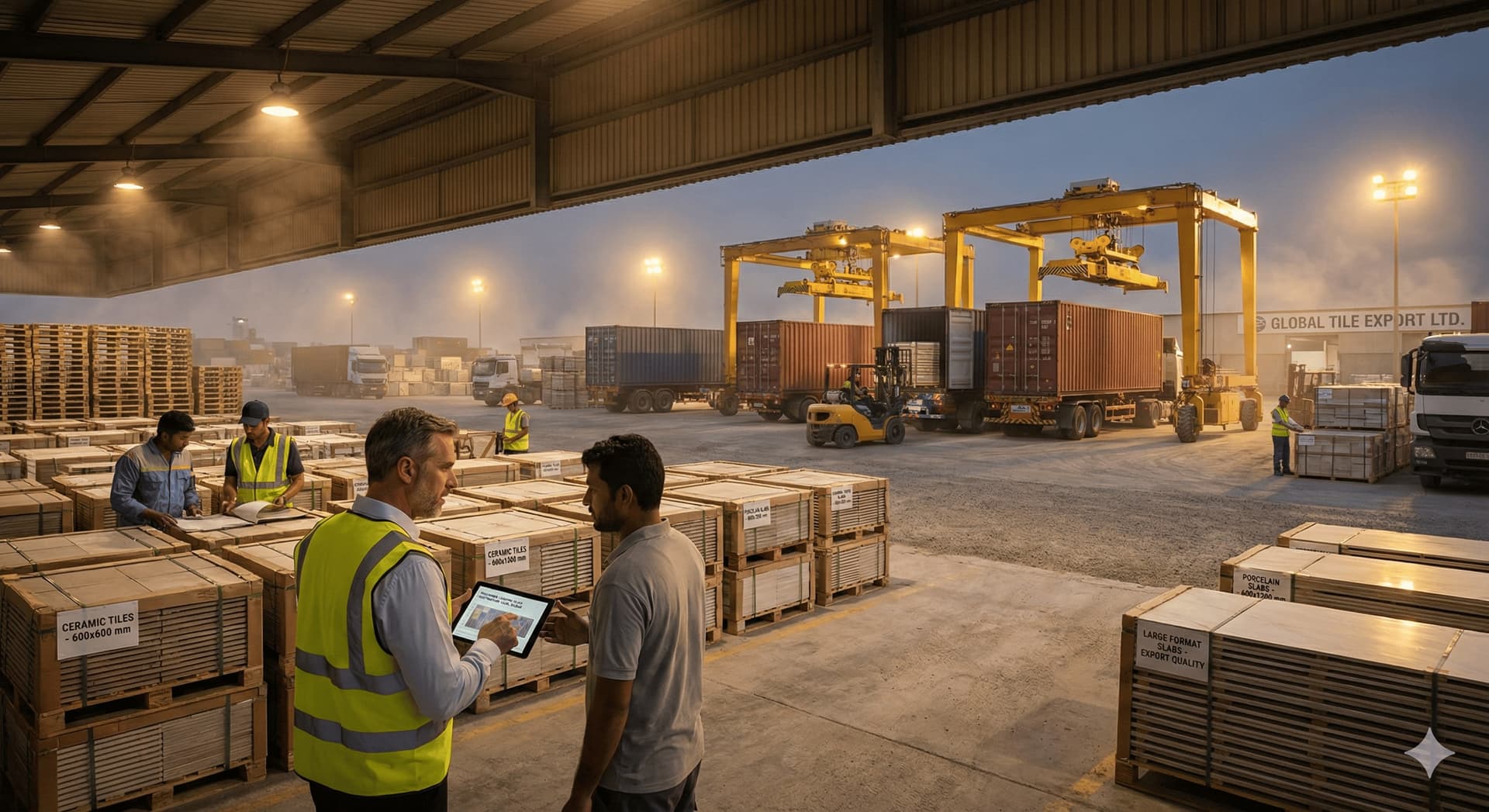
The ceramic tile industry has always evolved with architecture, design psychology, and construction technology. But in recent years, one shift stands out clearly: tile size is becoming a defining factor in both aesthetics and market demand.
From compact formats to large slabs, every size has its place. But the question importers, dealers, and manufacturers all ask is:
Which tile size will dominate the future?
Let’s decode this through design trends, construction economics, and market behavior.
The Evolution of Tile Sizes
Historically, tile sizes have expanded as technology improved.
- Earlier: 300×300 mm and 400×400 mm dominated
- Then: 600×600 mm became the industry standard
- Now: 600×1200 mm, 800×1600 mm, and slabs are rising
Annotation:
Large Format Tiles refer to tiles typically larger than 600×600 mm.
Slabs refer to very large sizes like 1200×2400 mm or bigger.
This progression is not random. It reflects changing consumer preferences and construction practices.
The Three Major Forces Driving Future Tile Size
1. The Desire for Seamless Spaces
Modern architecture prefers clean, uninterrupted surfaces.
Larger tiles mean:
- Fewer grout lines
- More premium appearance
- Easier visual continuity
This is why large formats are becoming popular in:
- Living rooms
- Commercial spaces
- Luxury homes
2. Urbanization and Compact Living
Paradoxically, while homes are becoming smaller in urban areas, larger tiles are still preferred.
Why?
Because large tiles create an illusion of space. Fewer joints make rooms feel bigger and less cluttered.
3. Technology and Manufacturing Advancements
Modern kilns and digital printing allow:
- Thinner yet stronger tiles
- High-definition surface designs
- Large-size production with consistency
This makes large tiles more accessible and affordable than before.
The Contenders: Tile Sizes Competing for the Future
Let’s examine the main size categories and their future potential.
600×600 mm — The Evergreen Workhorse
This size has been the backbone of the tile industry for years.
Why it will stay relevant:
- Easy installation
- Lower cost
- Ideal for mass housing and budget projects
However, it may gradually shift from premium to entry-level segment.
600×1200 mm — The Rising Champion
This size is currently one of the fastest-growing segments globally.
Why it’s leading:
- Balanced proportion (not too big, not too small)
- Premium look with manageable installation
- Suitable for both floors and walls
Market Insight:
Many importers report that 600×1200 mm offers the best combination of design appeal, price acceptance, and logistics efficiency.
800×1600 mm and 1200×1800 mm — The Premium Shift
These sizes are gaining traction in:
- Luxury residential projects
- Hotels and commercial buildings
- Designer interiors
They deliver a high-end marble slab appearance.
But challenges remain:
- Higher cost
- Installation expertise required
- Transport handling care
1200×2400 mm and Above — The Slab Revolution
Slabs represent the future of architectural surfaces.
Applications include:
- Flooring
- Wall cladding
- Kitchen countertops
- Furniture surfaces
Annotation:
These are often called “GVT slabs” or “Porcelain slabs” depending on body composition and technology.
However, slabs are still limited to premium segments due to:
- High pricing
- Handling complexity
- Specialized installation tools
The Economics Behind Size Preference
The future of tile size is not decided by design alone—it is decided by economics.
Importers consider:
- Container loading efficiency
- Breakage risk
- Storage handling
- Demand velocity
For example:
- Very large slabs may offer high margin but slow turnover
- Mid-sized formats offer faster sales and better cash rotation
Core Principle:
The most successful size is not the biggest—it is the one that balances demand, cost, and movement.
Regional Market Behavior
Tile size preference varies by region:
- Developed markets: High demand for slabs and large formats
- Developing markets: Strong demand for mid-size (600×1200)
- Budget-driven regions: Continued demand for 600×600
This means no single size will dominate everywhere—but one size can dominate global trade volume.
So, Which Size Will Lead the Future?
Based on current trends, economics, and market acceptance:
600×1200 mm is most likely to lead the global ceramic tile market in the near future.
Because it offers:
- Premium appearance
- Practical installation
- Affordable pricing
- High container efficiency
- Fast market movement
It sits perfectly between luxury aspiration and practical affordability.
The Future Will Be Multi-Size, Not Single-Size
While 600×1200 mm may lead volume-wise, the future is not about one size replacing all others.
Instead, the industry will move towards a segmented size ecosystem:
- 600×600 → Budget and volume segment
- 600×1200 → Core mainstream premium
- 800×1600 and above → Luxury and designer segment
- Slabs → Architectural and niche applications
Final Thought
Tile size is not just a measurement—it is a reflection of how people want to experience space.
As architecture moves toward minimalism, openness, and material realism, larger formats will continue to rise.
But the true winner will always be the size that balances:
- Design appeal
- Cost efficiency
- Ease of use
- Market demand
In today’s world, that sweet spot is clearly occupied by 600×1200 mm—the format that bridges aspiration and practicality.
The future of tiles is not just bigger. It is smarter, faster-moving, and aligned with how people live.