What Professional Importers Look for in a Ceramic Tile Export Partner
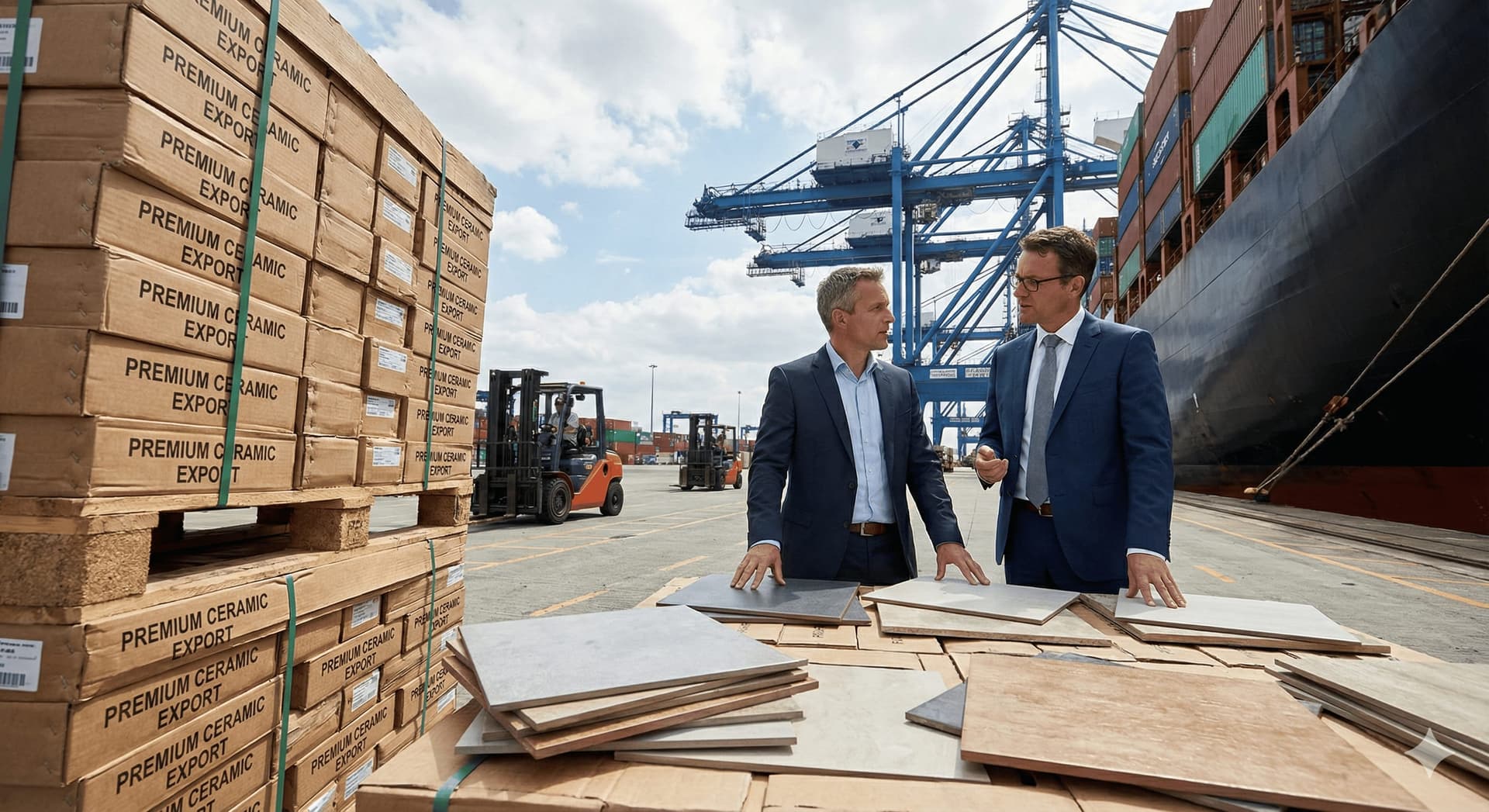
What Professional Importers Look for in a Ceramic Tile Export Partner
In international trade, ceramic tiles are not bought casually.
They are sourced carefully.
For professional importers, distributors, and project buyers, choosing a ceramic tile export partner is less about price and more about predictability, reliability, and long-term risk control.
Tiles may look similar in catalogs, but exporters are not. The difference becomes visible only after the container arrives—or fails to arrive smoothly.
This article explains what experienced importers truly look for in a ceramic tile export partner and why these factors matter more than short-term cost advantages.
1. Clear Role and Supply Chain Transparency
Professional importers first want clarity:
Who is actually behind the product?
Export partners who clearly define their role—whether sourcing from multiple factories or managing production directly—build confidence. Transparency around manufacturing sources, quality checks, and packing responsibility reduces uncertainty.
Annotation:
Importers value exporters who explain their supply chain openly rather than hiding behind vague assurances.
2. Strong Understanding of Product Specifications
Tiles are technical building materials, not decorative items.
Importers expect their export partner to understand and communicate:
- Water absorption levels
- Breaking strength
- Calibration and rectification standards
- Surface finishes and tolerance limits
Exporters who proactively share technical details demonstrate seriousness and professionalism.
3. Consistency Across Shipments
Consistency is one of the most important criteria for repeat business.
Professional importers plan projects across multiple containers and timelines. They need confidence that tiles supplied today will match tiles supplied months later.
This includes:
- Shade consistency
- Batch control
- Size and surface uniformity
Annotation:
Inconsistent supply creates project-level risk, not just product dissatisfaction.
4. Export-Grade Packing and Breakage Control
Importers know that tile quality means little if the product arrives damaged.
Strong export partners invest in:
- High-strength cartons
- Proper palletization
- Edge protection for large-format tiles
- Secure container stuffing
Exporters who document packing through photos or videos signal accountability and experience.
5. Container Optimization and Logistics Awareness
Professional importers think in containers, not boxes.
They prefer export partners who understand:
- Container load limits
- Optimal box configuration
- Net vs gross weight balance
- Freight efficiency
Efficient container planning directly affects landed cost and competitiveness in the destination market.
6. Accurate Documentation and Compliance Support
Documentation errors are one of the fastest ways to lose importer trust.
Reliable export partners handle:
- Commercial invoices and packing lists
- Bills of lading
- Certificates of origin
- Test reports when required
Annotation:
Importers prefer exporters who prevent documentation issues rather than react to them after arrival.
7. Experience Handling International Markets
Professional importers value partners who understand market-specific requirements.
Different regions have different expectations related to:
- Packaging
- Labeling
- Compliance
- Shipping practices
Exporters with multi-market experience reduce learning curves and clearance risks for buyers.
8. Clear Communication and Responsiveness
Timely communication is a non-negotiable expectation.
Importers assess export partners based on:
- Response speed
- Clarity of answers
- Willingness to explain issues
When delays or challenges arise, professional handling matters more than perfection.
9. Defined Process for Claims and Issue Resolution
No international supply chain is completely risk-free.
What distinguishes strong export partners is a clear and fair approach to handling claims, whether related to breakage, documentation, or quality.
Annotation:
Importers judge exporters not by the absence of problems, but by how problems are resolved.
10. Long-Term Partnership Mindset
Professional importers are not looking for one-time deals.
They value export partners who think in terms of:
- Repeat shipments
- Stable pricing logic
- Continuous improvement
- Mutual growth
Exporters who understand this mindset naturally earn long-term business.
A Practical Perspective from the Export Side
Export companies like Prival Exports, which operate with a structured sourcing network, export-focused quality checks, and container-level planning, align well with what professional importers expect.
By focusing on transparency, consistency, packing standards, and documentation accuracy, such exporters position themselves as solution partners rather than transactional suppliers.
Final Thought
Professional importers do not choose ceramic tile export partners based on price alone.
They choose partners who reduce uncertainty, protect timelines, and support their business reputation in the destination market.
In global tile trade, trust is not claimed—it is demonstrated shipment after shipment.
The exporters who understand this are the ones importers stay with.
Conclusion
A strong ceramic tile export partner combines product knowledge, operational discipline, logistics awareness, and communication clarity. Importers who prioritize these qualities build more resilient supply chains—and exporters who deliver them build lasting international relationships.