What Makes a Tile Shipment Profitable (and What Breaks It)
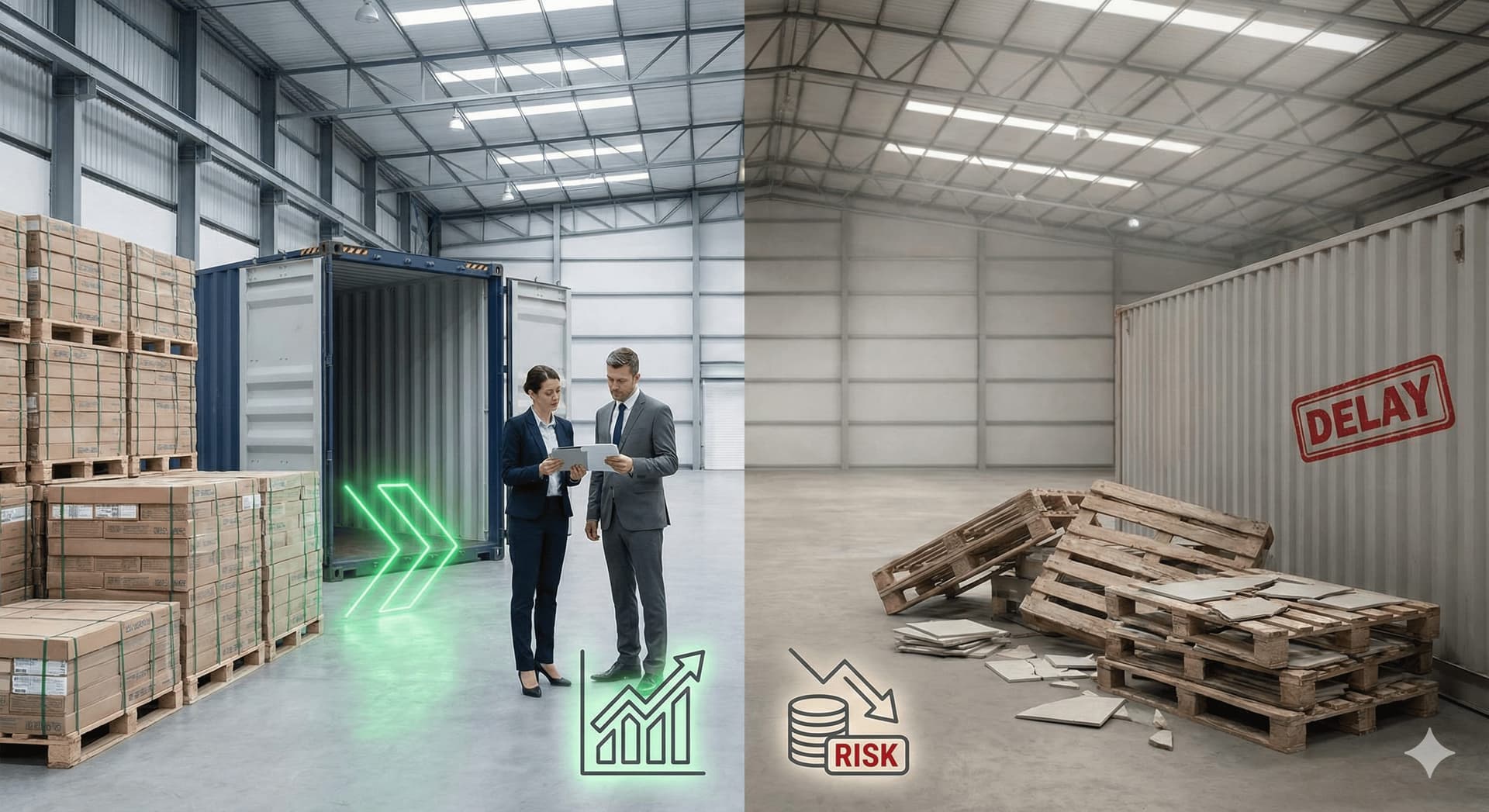
In the tile business, profit is not decided by the price on the invoice.
It is decided by everything that happens after the invoice is issued.
Many shipments that look profitable on paper end up losing money due to breakage, delays, mismatches, storage costs, and reorders. At the same time, some shipments with average pricing turn into long-term winners because they are planned, packed, and executed correctly.
This article explains what truly makes a tile shipment profitable—and what silently destroys that profit.
1. Profit Starts with Market Fit, Not Product Price
The first mistake many buyers make is choosing tiles based only on factory price.
A profitable shipment begins with market alignment:
- Does the design match local taste?
- Is the size practical for installers?
- Does the finish suit the climate?
- Can it compete at the local retail price?
Annotation:
A cheap tile that doesn’t sell is not cheap—it’s dead stock.
2. Consistency Creates Repeat Profit
One-time sales don’t build businesses—repeat orders do.
Consistency in:
- Shade
- Size
- Surface finish
- Batch matching
is what allows distributors and retailers to reorder confidently.
Annotation:
Inconsistency creates rejections, returns, and reputation damage.
3. Packing Quality Protects Your Margin
Tiles are fragile, heavy, and sensitive to vibration. Most damage occurs not in factories, but during transit.
Profit-conscious buyers prioritize:
- Strong cartons
- Palletized loading
- Edge protection
- Moisture resistance
Annotation:
Every broken tile is not just a product loss—it’s a margin loss.
4. Container Optimization Is a Hidden Profit Lever
Smart buyers don’t think in boxes. They think in containers.
They calculate:
- Square meters per container
- Weight compliance
- Stackability
- Pallet vs loose loading
Better container utilization lowers freight cost per unit without sacrificing quality.
Annotation:
Logistics efficiency often adds more profit than price negotiation.
5. Documentation Accuracy Prevents Cost Leakage
Incorrect documents quietly destroy profitability.
Problems include:
- Port delays
- Storage charges
- Demurrage
- Rebooking costs
Key documents must match perfectly:
- Commercial invoice
- Packing list
- Bill of lading
- Certificates
Annotation:
Customs clears paperwork, not promises.
6. Lead Time Reliability Matters More Than Speed
Fast delivery is good. Predictable delivery is better.
When shipments arrive late:
- Projects get delayed
- Labor stands idle
- Warehousing costs rise
- Trust erodes
Professional buyers prefer exporters who deliver when promised—even if not the fastest.
7. Communication Prevents Escalation
Many losses happen because issues are discovered too late.
Strong exporters update buyers about:
- Production status
- Packing completion
- Container booking
- Shipping milestones
Early warnings allow buyers to adjust plans and avoid financial damage.
Annotation:
Silence is expensive in international trade.
8. Claims Handling Defines Long-Term Profitability
No shipment is perfect forever.
What matters is:
- How breakage is handled
- How shade issues are resolved
- How disputes are closed
Buyers who work with exporters having clear claim processes lose less money over time.
Annotation:
Professionalism during problems is more valuable than perfection.
9. Inventory Planning Determines Cash Flow
Over-ordering locks capital. Under-ordering loses sales.
Profitable buyers plan:
- Stock turnover
- Seasonal demand
- Project cycles
They align container quantities with actual sales velocity.
10. Relationships Multiply Profit Over Time
Short-term thinking focuses on discounts.
Long-term thinking focuses on systems.
Strong exporter–buyer relationships lead to:
- Better planning
- Priority production
- Fewer mistakes
- Lower risk
That’s where real profit lives.
What Breaks Tile Shipments Financially
Here are the silent profit killers:
- Choosing based on price alone
- Ignoring packing standards
- Poor container planning
- Document mismatches
- Shade inconsistency
- Weak communication
- No claim framework
Each one looks small. Together, they destroy margins.
Final Thought
A profitable tile shipment is not lucky.
It is engineered.
From product selection to packing design, from container planning to documentation, profit is protected at every stage.
In tile imports, you don’t earn profit at the factory.
You protect it across the supply chain.
Conclusion
True profitability in tile trade comes from planning, consistency, logistics intelligence, and long-term thinking. Buyers who understand this build stable businesses. Exporters who support this become irreplaceable.
Price attracts attention.
Systems create profit.