What First-Time Tile Importers Always Underestimate (And Pay For Later)
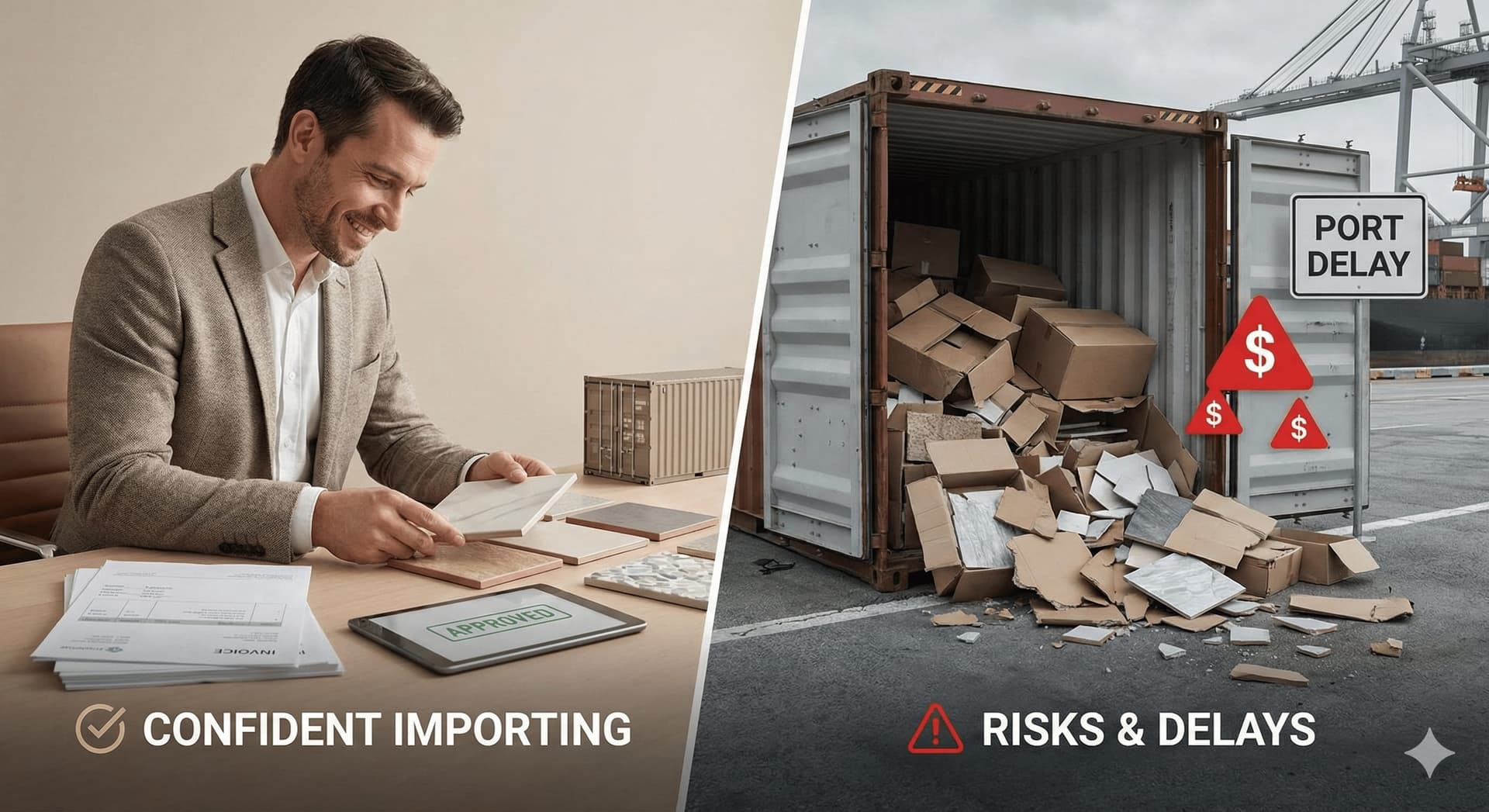
The first tile import almost always looks profitable.
The quotation seems competitive. Samples look good. Freight is booked. Confidence is high.
Then the container arrives—and reality starts charging interest.
Experienced importers know that most losses don’t come from bad intentions or poor products. They come from underestimating hidden complexities that only appear after money is committed.
This article explains what first-time tile importers consistently underestimate—and why those oversights often cost far more than expected.
1. The Difference Between Sample Quality and Shipment Quality
Samples are controlled. Shipments are not.
First-time importers often assume that a good sample guarantees a good container. In reality, consistency across thousands of tiles requires:
- Batch control
- Shade management
- Caliber consistency
- Process discipline
Annotation:
A sample proves capability. A shipment tests systems.
2. Packing Quality Is Not a Minor Detail
Many beginners focus on tile price and ignore packing standards.
Weak cartons, poor palletization, or careless container loading lead to:
- Breakage
- Corner damage
- Partial rejection
- Customer complaints
Even small damage percentages can erase margins.
Annotation:
Packing is not logistics—it’s product protection.
3. Freight Cost Is Only the Beginning
First-time importers often calculate freight per container, not per square meter.
They underestimate:
- Container utilization efficiency
- Weight limits
- Space wastage
- Repacking or reloading risks
Two shipments with the same freight cost can have very different landed costs.
4. Documentation Errors Are Expensive
Paperwork looks simple—until it isn’t.
Common mistakes include:
- Invoice and packing list mismatch
- Incorrect HS codes
- Missing certificates
- Inconsistent weights
These errors cause:
- Port delays
- Demurrage charges
- Clearance holds
Annotation:
Customs doesn’t negotiate. It penalizes.
5. Lead Time Predictability Matters More Than Speed
New importers chase fast delivery.
Experienced importers chase reliable delivery.
Unpredictable lead times cause:
- Project delays
- Idle labor
- Storage costs
- Reputation damage
Annotation:
Late shipments cost more than slow shipments.
6. Communication Gaps Multiply Risk
Silence is dangerous in international trade.
First-time buyers underestimate how critical it is to receive:
- Production updates
- Packing confirmation
- Container booking details
- Shipping schedules
Late information removes the chance to correct problems early.
7. Quality Claims Are Harder Than Expected
When issues arise, beginners assume claims are straightforward.
In reality:
- Evidence is required
- Timing matters
- Responsibility must be clearly defined
- Insurance coverage is limited
Annotation:
Claims are resolved by preparation, not arguments.
8. Inventory Moves Slower Than Planned
New importers are optimistic about sales velocity.
They underestimate:
- Market acceptance time
- Dealer feedback cycles
- Price resistance
- Competing stock
Slow-moving inventory locks cash and increases storage cost.
9. Supplier Selection Is About Systems, Not Price
First-time buyers often choose suppliers based on:
- Lowest quote
- Fastest promise
- Best catalog
Experienced buyers choose based on:
- Process discipline
- Export experience
- Problem-handling ability
Annotation:
Cheap suppliers are expensive teachers.
10. One Shipment Is Easy—Repeatability Is Hard
Many first shipments succeed by luck.
Long-term success requires:
- Consistent quality
- Repeatable batches
- Stable pricing logic
- Clear communication systems
This is where inexperienced importers struggle most.
Final Thought
First-time tile importers rarely fail because of bad decisions.
They fail because of incomplete understanding.
Tiles are simple products—but tile imports are complex systems. Every underestimated detail compounds into cost, delay, or frustration.
The fastest way to lose money is to assume the first shipment will teach you everything.
The smartest way to profit is to learn from those who already paid the tuition.
Conclusion
Tile importing rewards preparation, discipline, and realism. First-time importers who recognize hidden costs, respect process complexity, and choose system-driven partners avoid expensive lessons. In global trade, experience isn’t optional—it’s prepaid by someone, sooner or later.