Tile Trends Across Markets: What’s Selling in the UK, UAE, and Africa
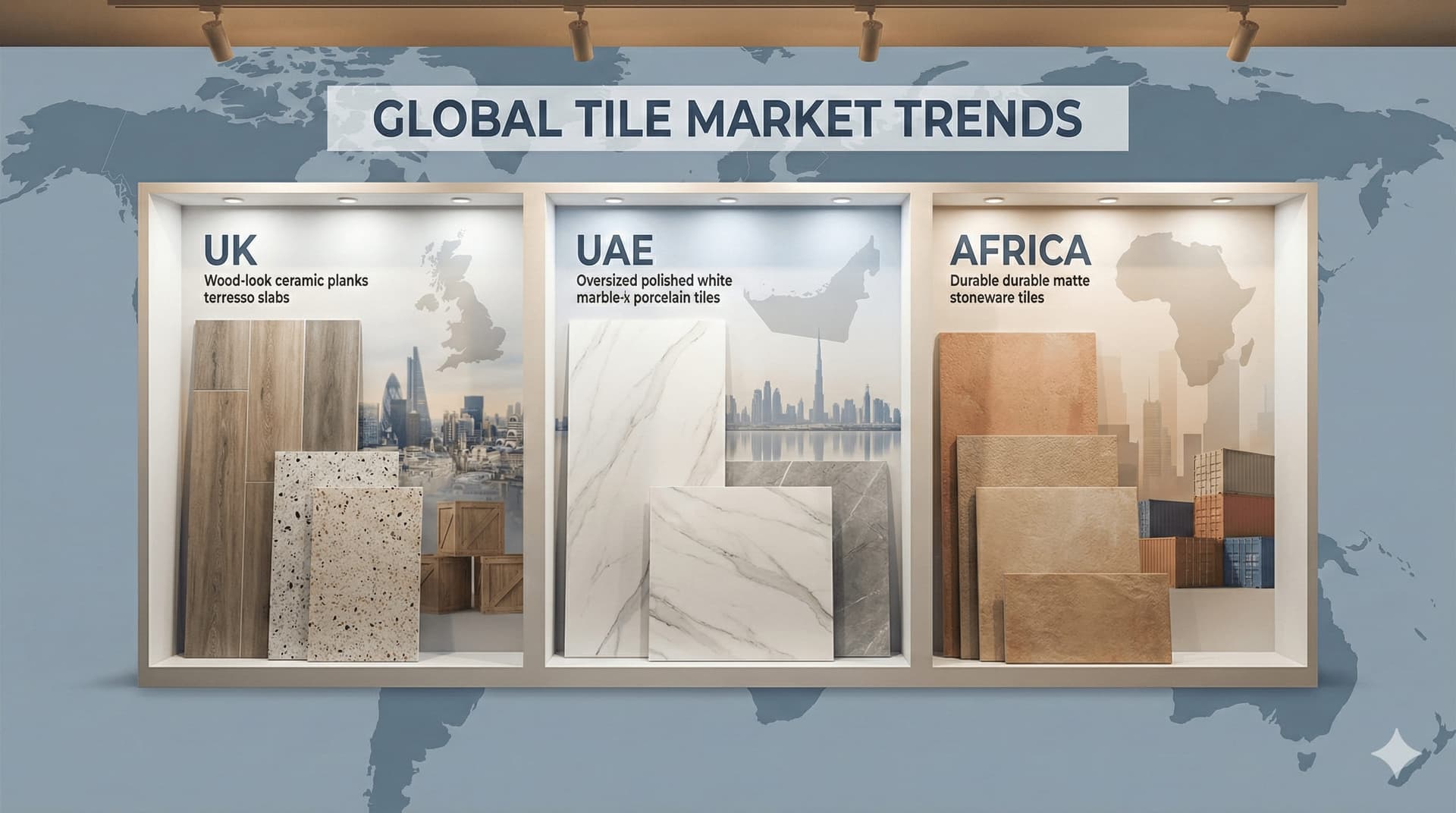
Ceramic tiles may be manufactured globally, but they are not consumed the same way everywhere. What sells fast in the UK may struggle in Africa, while what performs well in the UAE may not work in European markets.
Smart buyers don’t follow global trends blindly—they study regional behavior, climate, income levels, and usage patterns before choosing what to stock.
This blog explores what tile types, sizes, and materials are currently trending in the UK, UAE, and African markets—and why.
1. United Kingdom: Design Meets Practicality
The UK market is driven by renovation demand, urban living, and lifestyle-focused interiors. Buyers want tiles that look premium but remain easy to maintain.
What’s Trending
- Wood-look porcelain tiles
- Stone- and marble-effect finishes
- Terrazzo and patterned tiles
- Matte and soft-satin surfaces
Popular Sizes
- 600×600 mm
- 600×1200 mm
- 800×800 mm
- Larger formats for modern interiors
Materials
- Porcelain (dominant for floors)
- Ceramic (mainly for walls and decorative use)
Annotation:
UK buyers prioritize aesthetic realism—tiles must closely resemble natural materials.
2. UAE: Luxury, Scale, and Visual Impact
The UAE market is heavily influenced by luxury real estate, hospitality projects, and modern architecture. Visual impact matters more here than in most regions.
What’s Trending
- Polished and glossy finishes
- Large-format slabs
- Marble-look and high-gloss surfaces
- Decorative mosaics for feature areas
Popular Sizes
- 600×1200 mm
- 800×1600 mm
- Slab-style large formats
Materials
- Porcelain (dominant)
- Glazed ceramic (mid-range segments)
Annotation:
In the UAE, tiles are often a statement product, not just a building material.
3. Africa: Functionality and Value Drive Demand
Africa is one of the fastest-growing tile markets, driven by urban expansion, housing projects, and infrastructure development. Demand is primarily volume-driven.
What’s Trending
- Neutral tones
- Simple stone-look designs
- Matte and semi-polished surfaces
- Durable, easy-clean finishes
Popular Sizes
- 300×300 mm
- 400×400 mm
- 600×600 mm
- 600×1200 mm (growing in urban areas)
Materials
- Ceramic (dominant due to affordability)
- Porcelain (growing in premium and urban segments)
Annotation:
In most African markets, durability and price outweigh design complexity.
4. How Climate Shapes Tile Demand
Climate plays a bigger role than many buyers realize.
Hot Regions (UAE, parts of Africa)
- Light colors
- Cool-touch surfaces
- Anti-slip finishes
Cooler Regions (UK)
- Warm tones
- Natural textures
- Stone and wood-look designs
Annotation:
Climate influences comfort, wear, and customer satisfaction.
5. Residential vs Commercial Demand
Residential Buyers Want:
- Visual appeal
- Trendy finishes
- Lifestyle-driven designs
Commercial Buyers Want:
- High durability
- Slip resistance
- Easy maintenance
Annotation:
A hotel lobby and a family home require very different tile performance.
6. Size Preferences by Market
Large-format tiles are rising globally, but adoption speed differs.
| Market | Large Formats | Standard Formats |
|---|---|---|
| UK | Medium-High | High |
| UAE | Very High | Medium |
| Africa | Growing | Very High |
7. Why Material Choice Matters
Porcelain
- Higher density
- Lower water absorption
- Suitable for heavy-use areas
Ceramic
- More affordable
- Easier to cut and install
- Popular for walls and budget floors
Annotation:
Porcelain dominates premium and commercial spaces, while ceramic leads in volume markets.
8. What Smart Buyers Do Differently
Successful buyers don’t ask:
“What tile is trending globally?”
They ask:
“What tile is trending in my market?”
They evaluate:
- Local income levels
- Installation practices
- Climate conditions
- Design preferences
Then they select products accordingly.
9. Common Mistakes Buyers Make
- Sending luxury tiles to price-sensitive markets
- Sending basic tiles to design-driven markets
- Ignoring climate impact
- Overestimating large-format demand
Annotation:
Wrong product-market fit creates slow sales and dead stock.
Final Thought
There is no universal best-selling tile.
There are only tiles that are best for a specific market.
Buyers who understand regional demand patterns protect margins, avoid unsold inventory, and build stronger distribution networks.
In global tile trade, success doesn’t come from trends—it comes from fit.
Conclusion
The UK, UAE, and Africa represent three very different tile markets—each shaped by unique economic, cultural, and climatic factors. Buyers who tailor their product mix to these realities outperform those who apply a one-size-fits-all strategy.
Tiles don’t just sell.
The right tiles sell in the right places.