The True Cost of Importing Ceramic Tiles: Beyond the Invoice
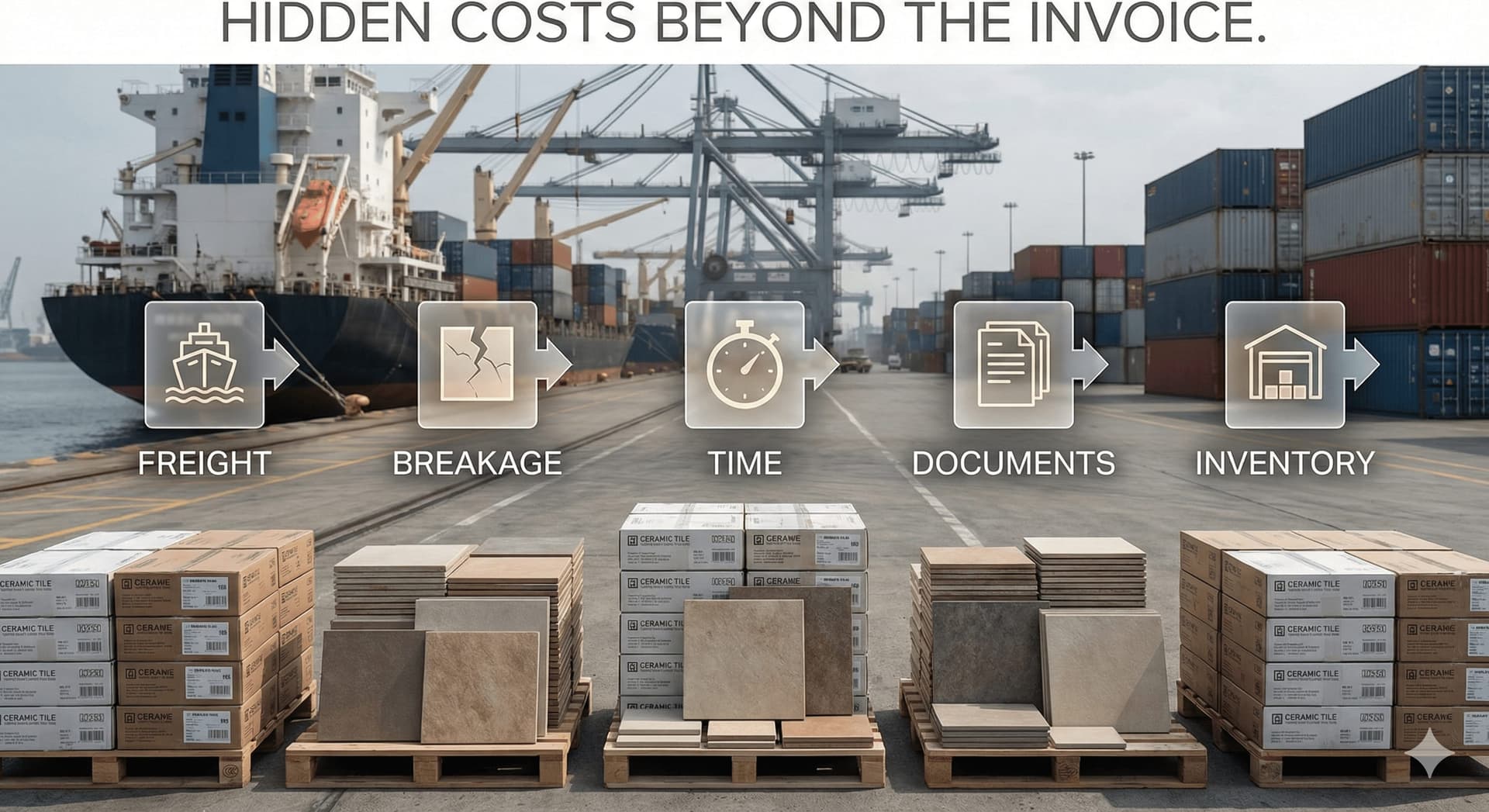
For many first-time importers, ceramic tile pricing seems simple.
You receive a quotation, compare rates, and choose the lowest number.
That approach is also how margins quietly disappear.
In reality, the invoice price is only the visible cost. The true cost of importing ceramic tiles is shaped by logistics, breakage, delays, compliance, and planning decisions made long before the container arrives.
This article breaks down the real cost components importers must understand to protect profitability.
1. Product Price Is Only the Starting Point
The invoice price reflects manufacturing cost and exporter margin—but nothing else.
It does not include:
- Breakage risk
- Freight efficiency
- Port delays
- Inventory holding
- Reordering costs
Annotation:
A low invoice price can mask high downstream expenses.
2. Packing Quality and Breakage Losses
Tiles are fragile, heavy, and sensitive to vibration.
Poor packing leads to:
- Broken tiles
- Partial container rejection
- Customer complaints
- Insurance disputes
Even a small breakage percentage can erase profit.
Annotation:
Breakage is a silent cost because it rarely appears on the invoice.
3. Container Utilization and Freight Cost per Sqm
Freight is usually the largest hidden cost in tile imports.
Two shipments with the same invoice value can have very different landed costs depending on:
- Boxes per container
- Pallet vs loose loading
- Weight distribution
- Container size selection
Smart importers calculate freight cost per square meter, not per container.
4. Port Charges, Demurrage, and Detention
Delays at port are expensive.
Hidden port-related costs include:
- Demurrage
- Detention
- Storage charges
- Rebooking fees
These often result from documentation errors or poor coordination.
Annotation:
Ports charge by the day, not by sympathy.
5. Documentation and Compliance Costs
Incorrect or incomplete paperwork can trigger:
- Customs inspections
- Clearance delays
- Additional fees
- Temporary seizure
Required documents may include:
- Certificates of origin
- Test reports
- Market-specific compliance papers
Annotation:
Customs clears documents, not product quality.
6. Quality Inconsistency and Reorder Risk
Shade variation, size mismatch, or surface defects may not stop clearance—but they can stop sales.
Costs include:
- Discounted selling
- Customer returns
- Emergency reorders
- Reputation damage
Reordering small quantities is usually more expensive than the original shipment.
7. Inventory Carrying and Cash-Flow Cost
Tiles don’t just cost money to buy—they cost money to store.
Hidden inventory costs include:
- Warehouse rent
- Capital lock-in
- Insurance
- Slow-moving stock
Annotation:
Cash tied up in unsold tiles is an invisible expense.
8. Installation and After-Sales Impact
In some markets, importers absorb costs caused by:
- Installation failures
- Inconsistent batches
- Customer complaints
These costs never appear in shipping documents—but they affect long-term business.
9. The Cost of Unreliable Supply Partners
Unreliable exporters increase:
- Management time
- Follow-up effort
- Error correction
- Stress on operations
Time spent fixing problems is a real cost, even if it’s not itemized.
Annotation:
Operational friction is a cost multiplier.
10. What Smart Importers Do Differently
Professional importers calculate total landed cost, including:
- Product + packing quality
- Freight efficiency
- Breakage probability
- Documentation accuracy
- Inventory turnover
They choose exporters who reduce uncertainty, not just prices.
Final Thought
The cheapest tile is rarely the most profitable.
Profit in tile imports is not earned on the invoice—it is protected across the supply chain. Importers who understand the full cost structure make fewer mistakes, face fewer surprises, and build stronger businesses.
In global tile trade, clarity beats cheapness.
Conclusion
Importing ceramic tiles is a system, not a transaction. The true cost includes logistics, risk, time, and reliability. Buyers who look beyond the invoice price gain control over margins and avoid the hidden traps that erode profitability.
The smartest importers don’t ask, “What does it cost?”
They ask, “What will it really cost?”