The Hidden Differences Between Similar-Looking Tiles from Different Countries
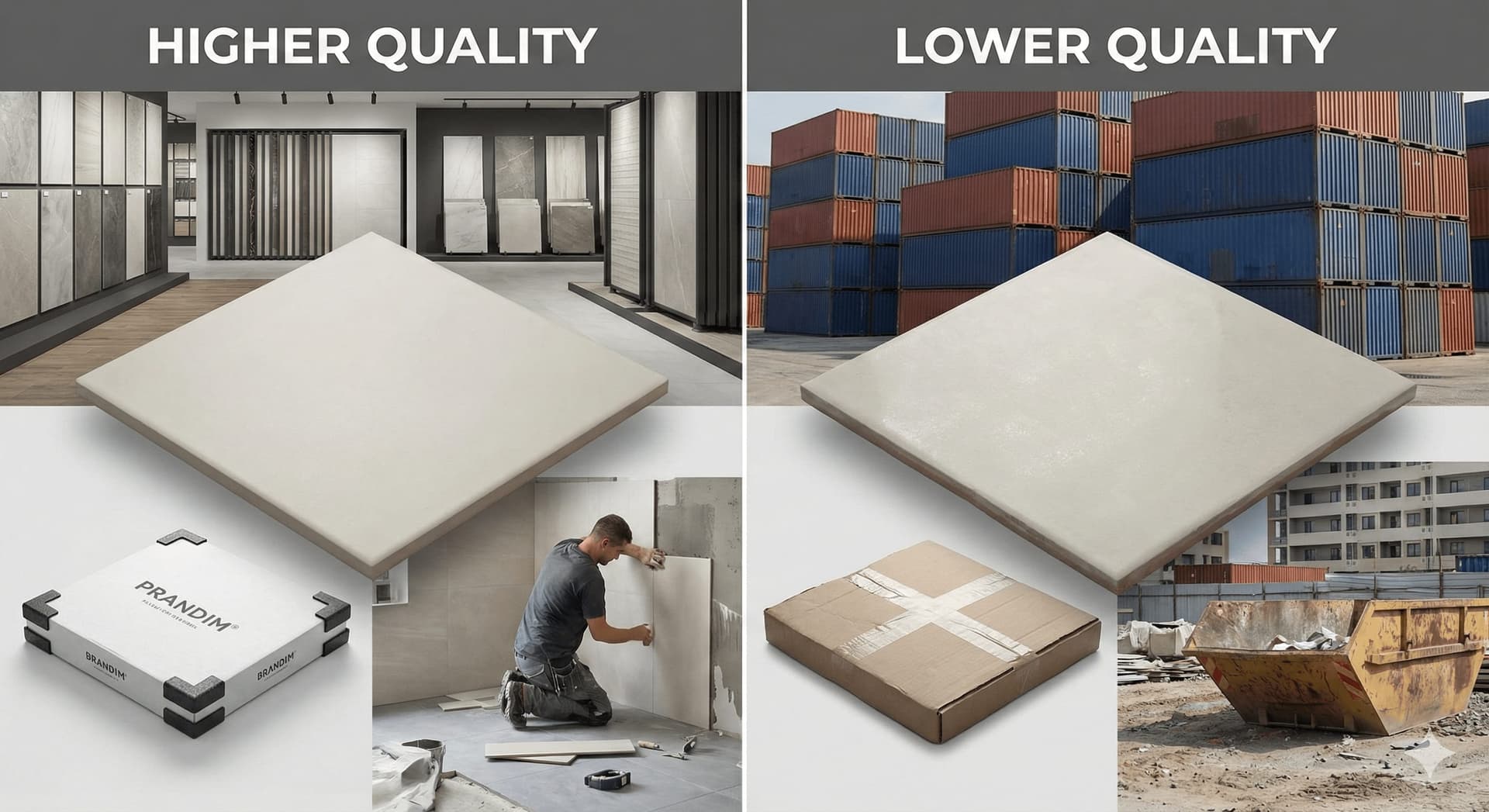
Two tiles can look almost identical in a showroom—and perform very differently in real use.
For importers, distributors, and project buyers, this is one of the most common (and costly) blind spots in international sourcing. When tiles from different countries share the same design, size, and finish, buyers often assume they are interchangeable.
They are not.
This article explains the hidden differences between similar-looking tiles from different countries—and why those differences matter to cost, performance, and long-term reputation.
1. Body Composition and Density
The visible surface may look the same, but the tile body beneath can vary significantly.
Differences in raw materials and firing processes affect:
- Density
- Water absorption
- Structural strength
High-density porcelain performs better in wet and heavy-use environments than lower-density alternatives.
Annotation:
Surface similarity does not guarantee internal strength.
2. Calibration and Dimensional Accuracy
Tiles must align perfectly during installation.
Countries and manufacturers differ in:
- Size accuracy (caliber)
- Edge rectification
- Thickness consistency
Small dimensional variations create:
- Uneven joints
- Lippage
- Installation delays
3. Shade Consistency Across Batches
Tiles are produced in batches, and shade variation is natural—but control differs by supplier.
Strong manufacturers maintain:
- Controlled shade variation
- Clear batch labeling
- Repeatable production runs
Weak control leads to mismatched floors and costly rework.
Annotation:
Shade control is invisible until it’s too late.
4. Surface Finish and Wear Resistance
Two tiles may share the same finish name (matte, polished, satin) but differ in performance.
Key differences include:
- Scratch resistance
- Slip resistance
- Stain resistance
- Surface durability
These differences become critical in high-traffic or commercial environments.
5. Digital Print Quality and Design Realism
Modern tiles use digital printing to replicate stone, marble, or wood.
Differences appear in:
- Depth of design
- Pattern variation
- Texture synchronization
Higher-end producers offer more natural, less repetitive visuals.
Annotation:
Design realism affects perceived value at the retail level.
6. Packing Standards and Breakage Risk
Packing quality varies widely across countries and suppliers.
Key factors:
- Carton strength
- Palletization method
- Edge protection
- Container loading discipline
Better packing reduces breakage, protects margins, and improves customer satisfaction.
7. Weight and Freight Efficiency
Tiles with similar appearance may differ in weight due to body composition and thickness.
Heavier tiles:
- Increase freight cost
- Reduce sqm per container
- Affect handling efficiency
Lighter, high-density tiles often deliver better logistics economics.
8. Compliance with Market Standards
Different export origins align differently with destination market standards.
Buyers must verify:
- Technical certifications
- Slip resistance ratings
- Water absorption classifications
- Environmental compliance
Annotation:
Non-compliance may pass the port—but fail the project.
9. Repeatability and Supply Stability
The real test of a tile supplier is not one shipment—but consistent repeat supply.
Differences include:
- Ability to reproduce the same design later
- Consistency across multiple containers
- Production planning discipline
10. Price vs Total Value
Tiles that look similar often have different price points.
The difference reflects:
- Quality control systems
- Packing standards
- Production technology
- Supply reliability
Lower price does not always mean better value.
Annotation:
The cheapest tile can become the most expensive shipment.
11. Installation Experience and Labor Impact
Installers immediately notice differences in:
- Tile flatness
- Edge precision
- Surface consistency
Tiles that are harder to install increase:
- Labor cost
- Installation time
- Rejection rates
12. Long-Term Performance and Reputation
For distributors and importers, the real difference appears after installation.
Tiles that:
- Stain easily
- Wear unevenly
- Crack under use
damage brand reputation and reduce repeat sales.
Final Thought
In global tile trade, similarity is often an illusion.
Two tiles may look the same on a display board—but differ in strength, consistency, packing, compliance, and performance.
Professional buyers don’t compare tiles by appearance alone.
They compare systems behind the tile.
Conclusion
Understanding the hidden differences between similar-looking tiles helps importers make smarter sourcing decisions, reduce risk, and protect long-term margins. The right choice is not the tile that looks the same—it’s the one that performs consistently from container to installation.
In tile sourcing, what you don’t see is what costs you.