The Economics of Slow-Moving Tile Inventory—and How Importers Avoid It
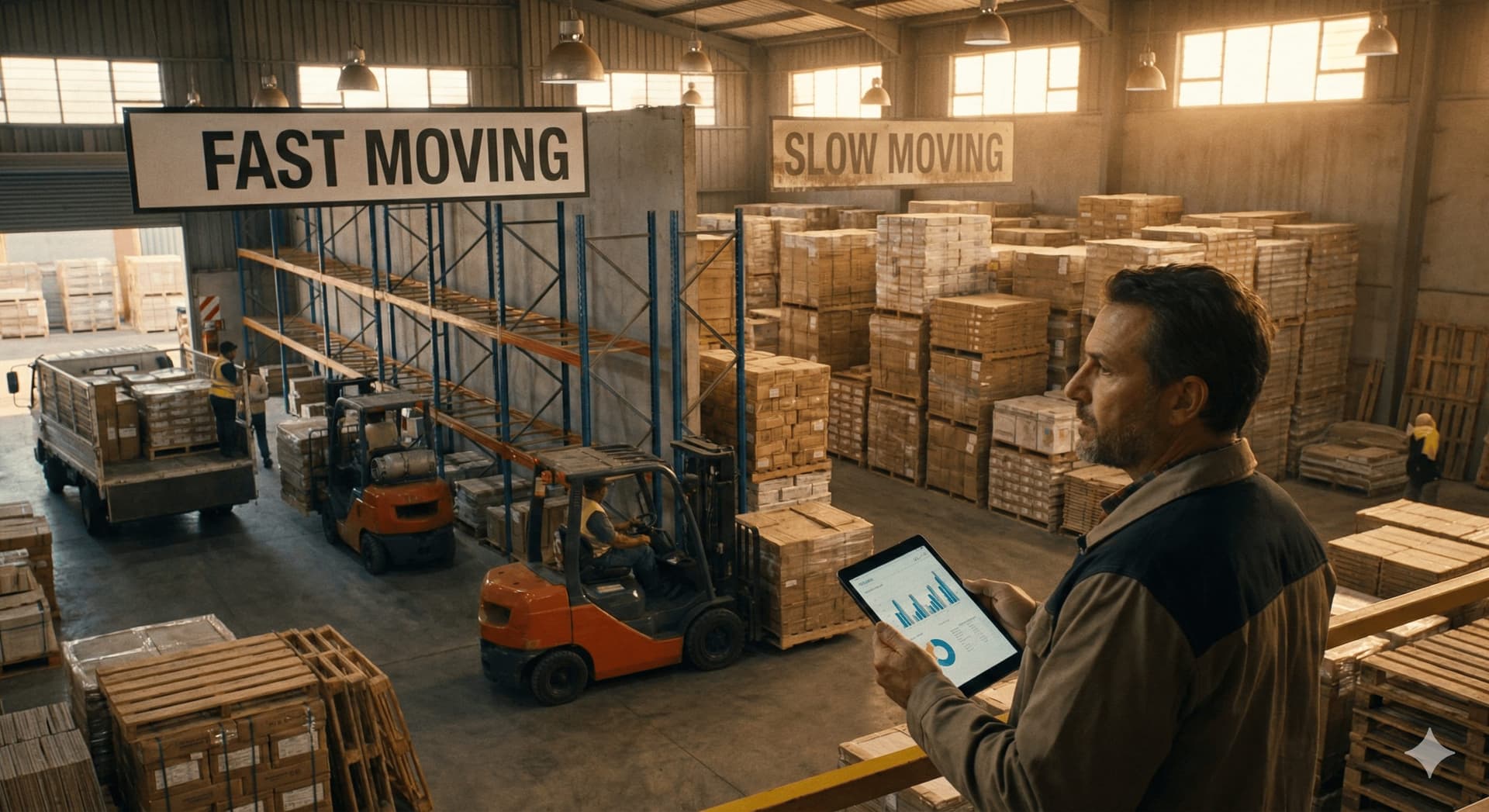
In the ceramic tile trade, inventory is not just stacked boxes—it is cash frozen in physical form. Every pallet sitting idle represents capital that is not circulating, trends that may already be fading, and storage costs quietly eating into margins. For importers, slow-moving inventory is one of the biggest hidden threats to profitability.
Let’s break down the economics behind it and how experienced importers avoid getting trapped.
What is Slow-Moving Tile Inventory?
Slow-moving inventory refers to stock that takes longer than expected to sell. In the tile business, this usually happens due to:
- Rapidly changing design trends
- Misjudging local demand
- Over-ordering to reduce freight cost
- Importing too many SKUs (design variations)
Tiles are design-sensitive products. A pattern that is popular today may become outdated within a short time.
Annotation:
SKU (Stock Keeping Unit) refers to a unique design, size, and finish combination of a tile product.
The Hidden Costs of Slow Inventory
At first glance, holding extra inventory may feel safe. In reality, it silently reduces business efficiency.
1. Capital Lock-In
Money invested in inventory cannot be used elsewhere. If ₹50 lakh is stuck in stock, it cannot be used for marketing, expansion, or sourcing new designs.
2. Warehousing Expenses
Rent, handling, and insurance create ongoing monthly costs. Over time, these costs accumulate and reduce margins.
3. Price Depreciation
Tile designs age. When trends change, old stock must often be sold at discounted prices.
4. Opportunity Cost
Warehouse space occupied by slow stock cannot be used for fast-selling products.
5. Cash Flow Pressure
Slow-moving inventory delays your cash cycle, making it harder to place new orders or negotiate better deals.
Insight:
In the tile trade, profit is driven not only by margin—but by how fast inventory rotates.
Why Tile Inventory Becomes Slow
Understanding the root causes helps in prevention.
Trend Misalignment
Interior and architectural trends evolve quickly. Matte, stone-finish, or large-format tiles can suddenly dominate demand.
Over-Buying for Freight Savings
Importers sometimes order extra containers to reduce freight cost per unit. But unsold stock can wipe out those savings.
Ignoring Local Preferences
Different regions prefer different aesthetics. What sells in metro cities may not sell in tier-2 or rural markets.
Excess SKU Variety
Too many designs dilute demand. Instead of selling large volume of a few designs, sales get spread thin across many.
The Core Metric: Inventory Turnover
Inventory turnover measures how many times your stock is sold and replaced within a period.
Formula:
Inventory Turnover = Cost of Goods Sold ÷ Average Inventory
Higher turnover means faster cash flow and better capital efficiency.
Rule of Thumb:
Lower margin with faster rotation is often more profitable than high margin with slow sales.
How Smart Importers Avoid Slow-Moving Inventory
Experienced importers follow structured strategies to minimize risk.
1. Demand-Driven Sourcing
Instead of importing what factories promote, they import what the market demands. They gather insights from dealers, builders, and ongoing construction projects.
2. Limited SKU Strategy
Top importers focus on 10–15 high-demand designs rather than 50 random designs. This increases volume per SKU and improves turnover.
3. Trial Shipments
Before large-scale importing, they test designs with smaller shipments. Fast sellers are scaled up, slow sellers are discontinued.
4. Pre-Booking from Dealers
Some importers secure advance orders from dealers before placing import orders.
Benefits:
- Confirmed demand
- Lower risk
- Faster cash cycle
5. Dynamic Pricing
Instead of panic discounting, smart pricing strategies are used to move stock gradually:
- Bundle deals
- Dealer incentives
- Time-bound offers
6. Regional Customization
Different locations have different preferences. Importers customize product mix accordingly.
Example:
- Urban buyers → minimalist matte finishes
- Semi-urban markets → glossy or decorative designs
7. Data-Based Forecasting
Modern importers track:
- Monthly sales velocity
- Fast vs slow SKUs
- Seasonal trends
This allows scientific planning for future imports.
Annotation:
Sales Velocity means the rate at which a product sells within a specific time period.
Margin vs Movement: The Strategic Balance
Many beginners focus on margin. Experts focus on movement.
Consider this:
- Product A: 25% margin, sells in 6 months
- Product B: 15% margin, sells in 2 months
Product B generates more annual profit because capital rotates faster.
Conclusion Insight:
In tile importing, speed of money matters more than size of margin.
A Simple Framework to Avoid Slow Inventory
Importers can follow this practical system:
- Validate demand before importing
- Keep SKU range focused
- Import in smaller phases
- Track sales monthly
- Act early on slow-moving stock
This keeps capital active and risk under control.
Final Thought
Tile importing is not just about sourcing products—it is about managing time, trends, and capital.
Slow-moving inventory is not merely a storage issue. It is a capital efficiency problem.
The importers who succeed are those who treat every container as a calculated investment—where every design is validated, every rupee is working, and every square foot of warehouse space generates return.