Private Label Tiles: How Global Buyers Build Their Own Brands
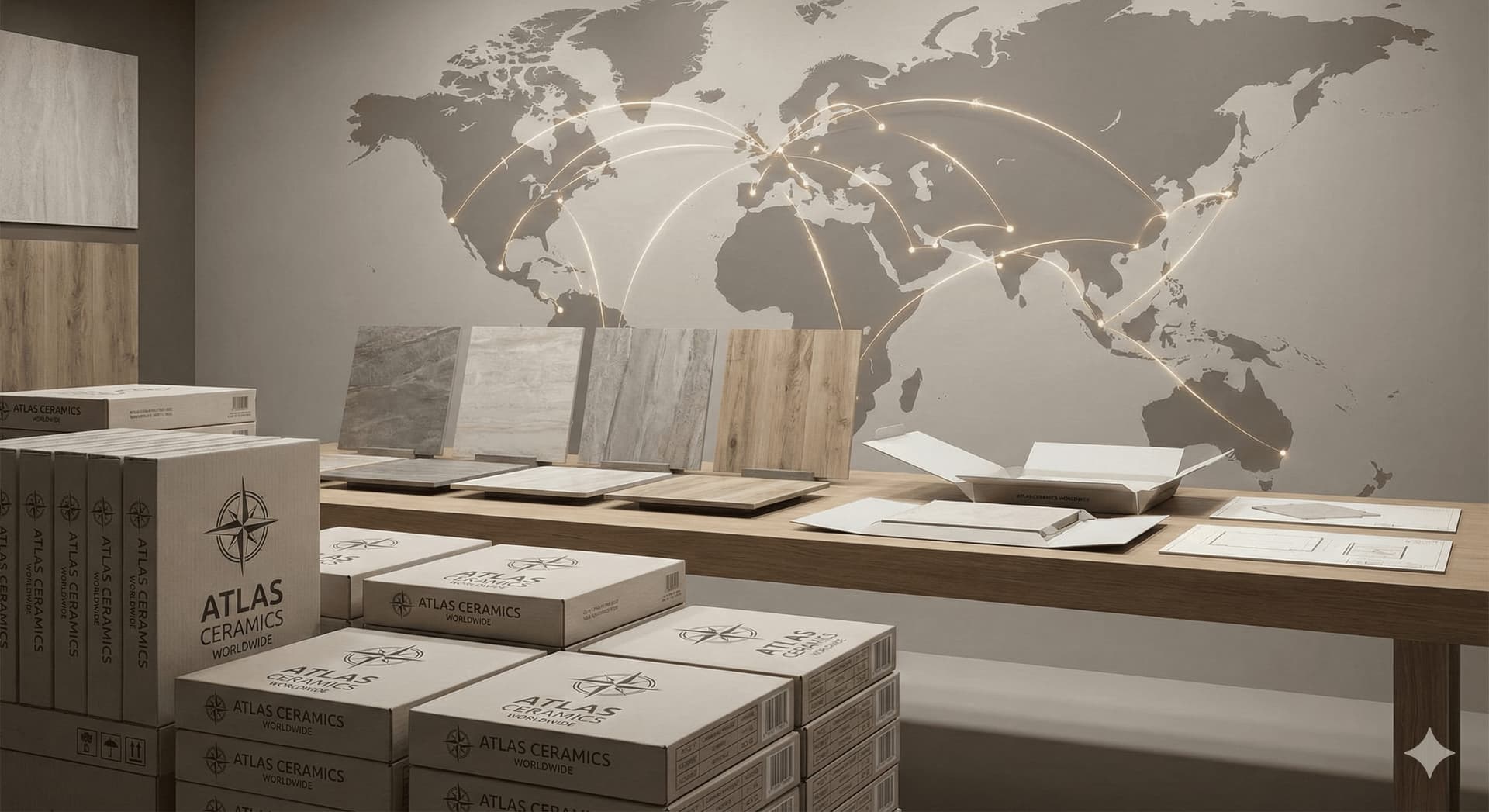
In the global tile business, margins are no longer won by selling the same products as everyone else.
They are won by owning the brand.
Across Europe, the Middle East, Africa, and North America, distributors and importers are increasingly shifting from selling factory brands to launching private label tile collections. This strategy gives buyers more control over pricing, positioning, and long-term growth.
This article explains how global buyers build private label tile brands, why the model is growing fast, and what it takes to execute it successfully.
1. What Are Private Label Tiles?
Private label tiles are tiles manufactured by a supplier but sold under the buyer’s own brand name.
The buyer controls:
- Brand name and identity
- Packaging and labeling
- Product positioning
- Distribution strategy
The manufacturer focuses on production, while the buyer owns the market-facing brand.
Annotation:
Private label does not mean lower quality—it means brand ownership.
2. Why Global Buyers Choose Private Label
Buyers adopt private labeling for three core reasons:
Higher Margins
Selling under your own brand removes direct price comparison with competitors.
Stronger Market Control
Retailers and distributors can position products exactly for their audience.
Long-Term Brand Equity
A brand builds value over time; a commodity does not.
Annotation:
Factories sell products. Brands sell trust.
3. Markets Where Private Label Works Best
Private label tile programs are especially strong in:
- Europe (UK, Germany, France)
- Middle East (UAE, Saudi Arabia)
- Africa (Nigeria, Kenya, Ghana)
- North America
These markets have established distribution networks and repeat demand, making brand-building viable.
4. How Buyers Build a Private Label Tile Brand
Step 1: Define the Market Position
Buyers decide whether the brand will be:
- Budget-focused
- Mid-range value
- Premium or lifestyle-oriented
This determines tile type, finish, and pricing.
Step 2: Select the Right Manufacturing Partner
Not all factories are suitable for private labeling.
Buyers look for partners who can:
- Maintain consistent quality
- Offer repeatable batches
- Support custom packaging
- Respect brand confidentiality
Annotation:
Private label fails when consistency fails.
Step 3: Customize Packaging and Identity
Brand perception begins with packaging.
Common customizations include:
- Brand logo and colors
- Box design and labeling
- Product codes and naming systems
- Market-specific language
Good packaging increases perceived value—even with the same tile.
Step 4: Control Product Range and SKUs
Successful private labels don’t launch hundreds of designs.
They focus on:
- High-demand sizes
- Proven finishes
- Limited but repeatable SKUs
This simplifies inventory management and strengthens brand recognition.
5. Quality Consistency Is the Backbone
Private label brands depend on repeat trust.
Buyers enforce:
- Batch control
- Shade and caliber consistency
- Standardized quality checks
- Clear inspection criteria
Annotation:
One inconsistent shipment can damage years of brand building.
6. Pricing Strategy: Where Private Label Wins
Private label tiles allow buyers to:
- Avoid direct price wars
- Create exclusive offerings
- Protect dealer margins
Because customers compare brands, not factories, pricing becomes strategic rather than reactive.
7. Logistics and Supply Chain Discipline
Private label brands require predictable supply.
Buyers prioritize:
- Export-grade packing
- Container optimization
- Reliable lead times
- Accurate documentation
Delays or shortages affect not just sales—but brand credibility.
8. Marketing and Sales Advantages
With private label tiles, buyers can:
- Run exclusive promotions
- Control online and offline pricing
- Build dealer loyalty
- Expand into new regions under one brand
Annotation:
Private label turns distributors into brand owners.
9. Common Mistakes Buyers Must Avoid
Private label programs fail when buyers:
- Change designs too frequently
- Ignore quality control
- Depend on a single unverified supplier
- Underestimate branding effort
Private labeling is a system—not a shortcut.
10. Why Exporters Supporting Private Label Gain Long-Term Partners
Exporters who understand private label dynamics become more than suppliers.
They become:
- Manufacturing partners
- Quality custodians
- Long-term collaborators
This leads to stable volumes, repeat orders, and shared growth.
Final Thought
Private label tiles are not about hiding the factory.
They are about building market power.
Global buyers who invest in branding, consistency, and disciplined supply chains move from price competition to value leadership.
In today’s tile trade, the strongest position is not the lowest price.
It’s owning the brand customers trust.
Conclusion
Private label tiles allow global buyers to control margins, differentiate products, and build long-term business value. With the right manufacturing partner, quality discipline, and market focus, private labeling transforms tile trading into brand building.
Products sell once.
Brands sell repeatedly.