India–USA Tariff Reduction: What It Means for Ceramic Tile Imports from India
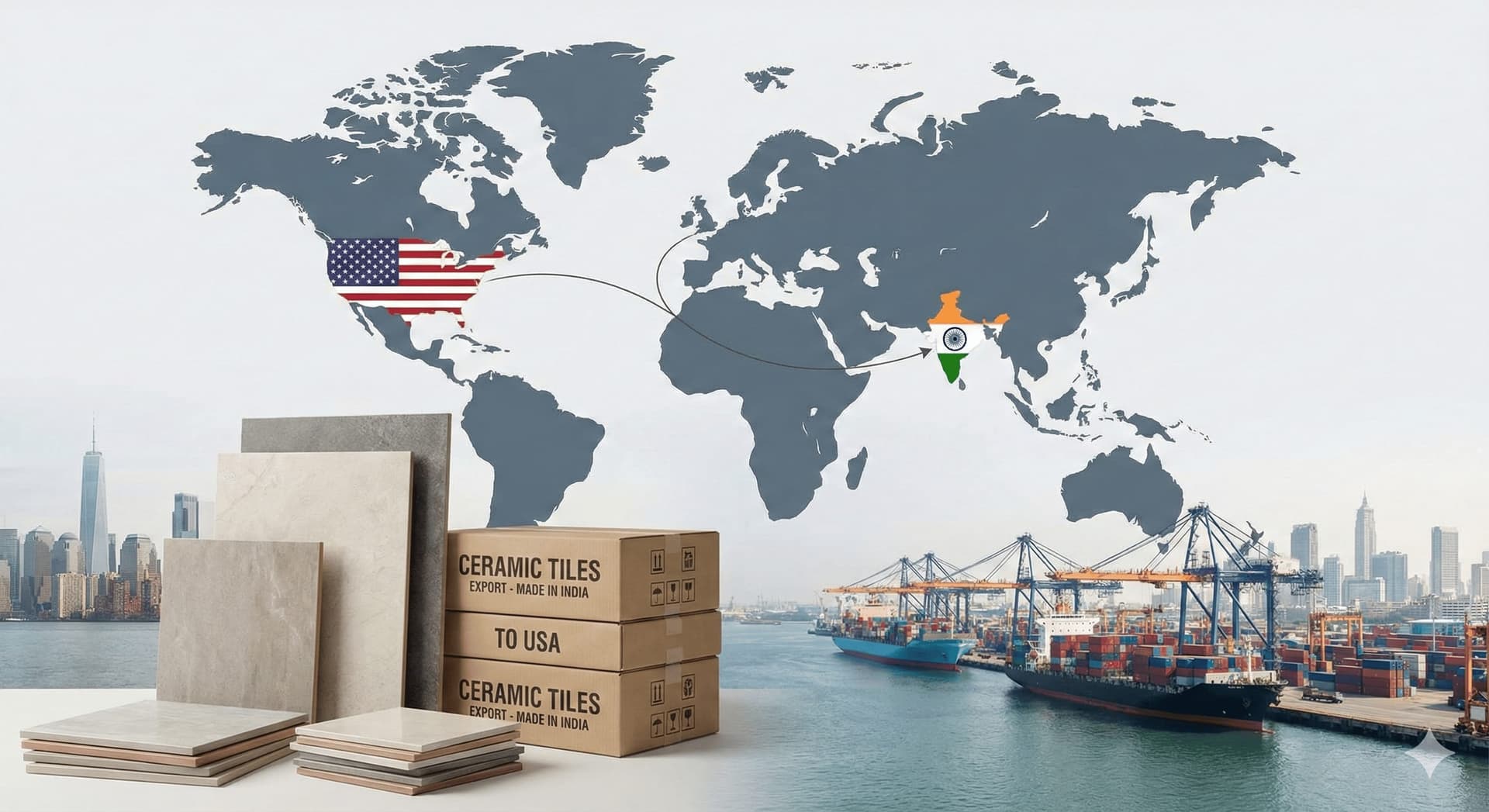
Trade policy doesn’t change markets overnight—but when tariffs move, sourcing decisions follow.
The recent India–USA tariff reduction agreement is one such shift that global buyers are watching closely. For ceramic tiles—a category driven by volume, logistics, and margins—tariff relief can meaningfully change landed costs, supplier choices, and long-term sourcing strategies.
This article explains what the India–USA tariff reduction means for ceramic tile imports from India and how US buyers may respond.
1. Why Tariffs Matter So Much in Tile Imports
Ceramic tiles are heavy, fragile, and freight-intensive. That makes total landed cost the real decision metric—not just factory price.
Tariffs directly affect:
- Import cost per square meter
- Retail pricing flexibility
- Distributor margins
Annotation:
In tiles, even small duty changes can swing competitiveness.
2. What the Tariff Reduction Changes for US Buyers
With lower duties on imports from India, US buyers can expect:
- Reduced landed costs
- Improved pricing headroom
- Better margin protection
This doesn’t just favor cheaper tiles—it improves economics across mid-range and premium segments as well.
3. India’s Manufacturing Advantage Becomes More Visible
India already offers:
- Large production capacity
- Competitive cost structures
- A wide design spectrum
- Mature export infrastructure
Tariff reduction amplifies these strengths, making Indian tiles more competitive against traditional sourcing countries.
Annotation:
Tariffs don’t create advantages—they unlock existing ones.
4. Diversification Away from Concentrated Supply Chains
US buyers are actively diversifying sourcing to reduce risk from:
- Single-country dependence
- Capacity bottlenecks
- Volatile logistics routes
India’s multiple manufacturing clusters and exporter ecosystem provide resilience and scalability—now with improved cost alignment.
5. Quality and Compliance Expectations Remain High
Lower tariffs do not lower expectations.
US buyers still demand:
- Consistent calibration and sizing
- Reliable shade control
- Compliance with US standards
- Export-grade packing to reduce breakage
Annotation:
Market access improves with tariffs; market retention depends on quality.
6. Design Fit for the US Market
The US market favors:
- Wood-look and stone-look tiles
- Matte and satin finishes
- Larger formats for modern spaces
- Durable surfaces for residential and light-commercial use
Indian manufacturers have rapidly aligned collections to these preferences, often with faster design cycles.
7. Impact on Private Label and Big-Box Programs
Tariff relief strengthens the case for private label sourcing.
US retailers and distributors benefit from:
- Better cost control
- Custom packaging and branding
- Stable, repeatable SKUs
Annotation:
Private label buyers value predictability as much as price.
8. Logistics and Lead-Time Still Decide Success
Even with tariff advantages, success depends on execution.
US buyers prioritize:
- Predictable lead times
- Strong packing standards
- Accurate documentation
- Transparent shipment updates
Export-focused partners and merchant exporters play a key role in managing this complexity.
9. What Indian Exporters Must Do to Capitalize
To fully benefit, Indian exporters should:
- Maintain strict quality discipline
- Invest in US-focused collections
- Strengthen documentation accuracy
- Build long-term buyer relationships
Annotation:
Tariff advantages attract buyers; reliability keeps them.
10. Long-Term Strategic Implications
This agreement is not just a short-term boost.
Over time, it can:
- Increase India’s share in US tile imports
- Encourage long-term supply contracts
- Support expansion into higher-value segments
Early movers—buyers and exporters alike—stand to gain the most.
Final Thought
The India–USA tariff reduction doesn’t automatically change sourcing—but it reshapes the math.
For US buyers, Indian tiles become more attractive on cost, scale, and flexibility. For Indian exporters, it’s an opportunity to move from transactional shipments to strategic partnerships.
In global trade, policy opens doors.
Prepared businesses decide who walks through.
Conclusion
The India–USA tariff reduction can significantly improve the competitiveness of Indian ceramic tiles in the US market. Lower duties, combined with India’s manufacturing scale and export maturity, create strong incentives for US buyers to reconsider sourcing strategies. Long-term success will depend on quality, compliance, and execution—not tariffs alone.