India–EU FTA: What It Means for Ceramic Tile Imports from India
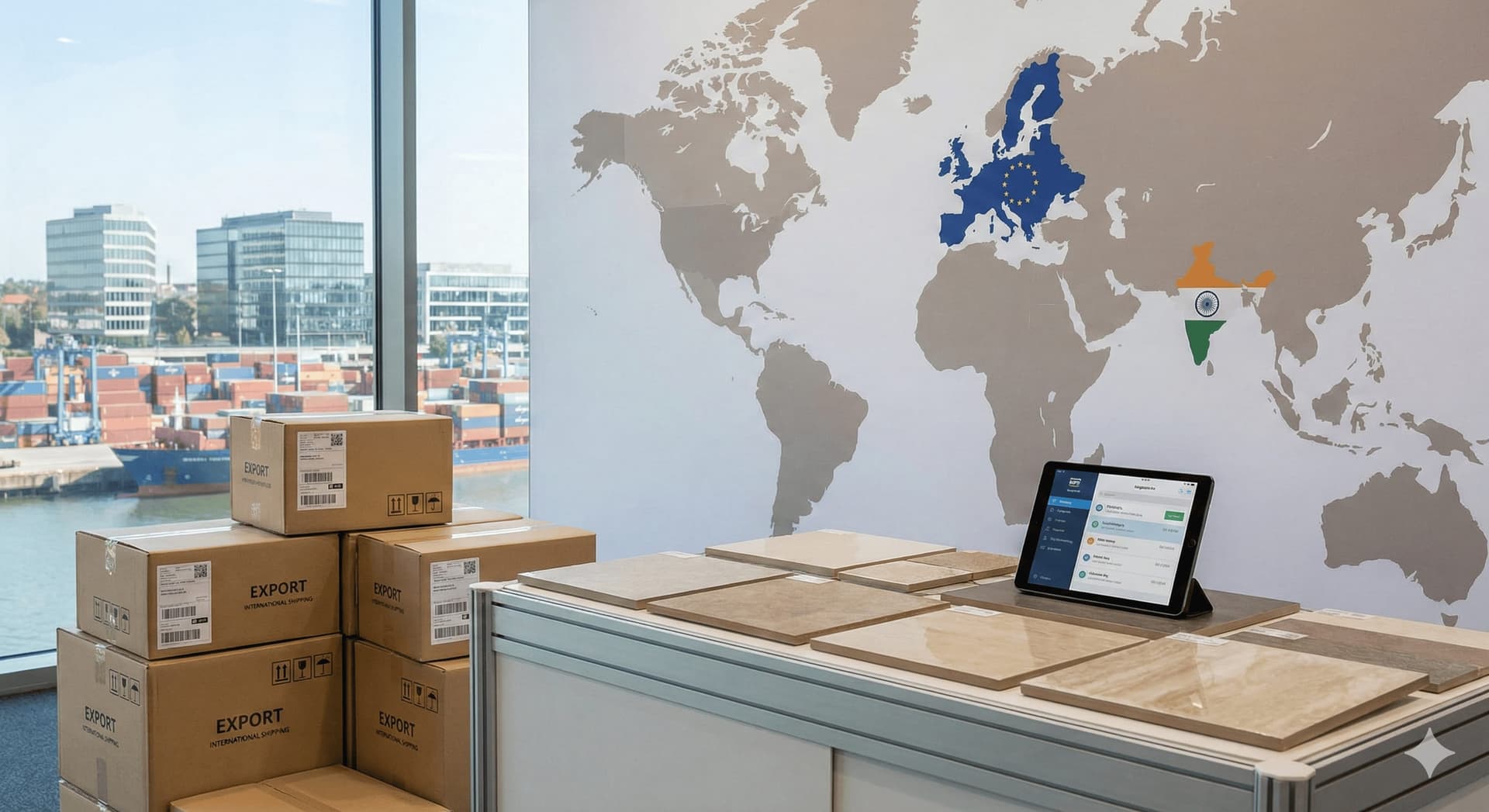
Trade agreements rarely excite end consumers—but they quietly reshape global supply chains.
The proposed India–EU Free Trade Agreement (FTA) is one such development. For European importers and Indian exporters, especially in sectors like ceramic tiles, this agreement has the potential to significantly change sourcing decisions, cost structures, and long-term partnerships.
This article explains what the India–EU FTA could mean for ceramic tile imports from India and why European buyers are paying close attention.
1. What Is the India–EU FTA?
The India–EU FTA is a comprehensive trade agreement aimed at reducing or eliminating tariffs, simplifying regulations, and improving market access between India and European Union member states.
Its core objectives include:
- Lower import duties
- Easier cross-border trade
- Improved regulatory cooperation
- Stronger supply-chain integration
Annotation:
FTAs don’t just reduce tariffs—they reduce friction.
2. Why Ceramic Tiles Are Part of the Conversation
Ceramic tiles are a high-volume, logistics-heavy product. Even small tariff changes can have a major impact on landed cost and competitiveness.
India is already one of the world’s largest tile producers, with strong advantages in:
- Manufacturing scale
- Cost efficiency
- Design adaptability
- Export experience
The FTA could amplify these strengths in the EU market.
3. Potential Tariff Advantages for EU Importers
Currently, ceramic tile imports into the EU face duties that affect pricing competitiveness.
If the FTA reduces or removes these tariffs:
- Landed cost for Indian tiles could decrease
- Importers gain pricing flexibility
- Indian products become more competitive against non-EU suppliers
Annotation:
A few percentage points in duty reduction can decide sourcing strategy.
4. Diversification Away from Traditional Supply Sources
The EU tile market has historically depended on:
- Domestic EU manufacturers
- Limited external suppliers
Rising production costs, energy prices, and capacity constraints in parts of Europe are pushing buyers to diversify sourcing.
India offers:
- Large production capacity
- Faster scalability
- Competitive pricing without compromising quality
The FTA strengthens India’s position as a reliable alternative.
5. Quality, Compliance, and EU Standards
EU buyers prioritize compliance as much as price.
Indian exporters have steadily improved:
- Product consistency
- Technical specifications
- Quality control systems
- Export-grade packing
With improved trade frameworks, alignment on standards and documentation becomes smoother.
Annotation:
EU buyers don’t compromise on compliance—even when costs drop.
6. What EU Buyers Stand to Gain
For European importers and distributors, the FTA can offer:
- Lower landed costs
- More stable supply options
- Increased supplier choice
- Better negotiation leverage
This is especially valuable for:
- Private label programs
- Large retail chains
- Commercial project suppliers
7. What Indian Tile Exporters Must Prepare For
Opportunity comes with responsibility.
To benefit fully, Indian exporters must:
- Maintain consistent quality
- Strengthen documentation accuracy
- Meet EU environmental and safety norms
- Invest in long-term buyer relationships
Annotation:
Market access is earned through reliability, not price alone.
8. Impact on Product Mix and Design Strategy
EU markets favor:
- Wood-look and stone-look tiles
- Matte and natural finishes
- Large formats
- Design realism
Indian exporters aligning product development with EU tastes will gain faster acceptance under the FTA framework.
9. Logistics and Lead-Time Considerations
Even with tariff benefits, logistics efficiency remains critical.
EU buyers expect:
- Predictable lead times
- Export-grade packing
- Reduced breakage risk
- Clear shipment visibility
Merchant exporters and export-focused partners play a key role here.
10. Long-Term Strategic Implications
The India–EU FTA is not just about immediate cost savings.
It represents:
- Long-term sourcing partnerships
- Supply-chain rebalancing
- Greater integration between Indian manufacturing and EU distribution
Exporters and buyers who position early gain strategic advantage.
Final Thought
The India–EU FTA has the potential to reshape ceramic tile trade between India and Europe.
For EU buyers, it opens access to a scalable, competitive supply base.
For Indian exporters, it offers entry into one of the world’s most demanding—and rewarding—markets.
In global trade, timing matters.
Those who prepare early benefit the most.
Conclusion
The India–EU FTA could mark a turning point for ceramic tile imports from India. Reduced tariffs, diversified sourcing, and improved trade frameworks make Indian tiles increasingly attractive to European buyers. Success, however, will depend on quality consistency, compliance, and long-term partnership thinking.
Trade agreements open doors.
Professional execution keeps them open.