How the India–USA Trade Agreement Can Reshape Ceramic Tile Sourcing
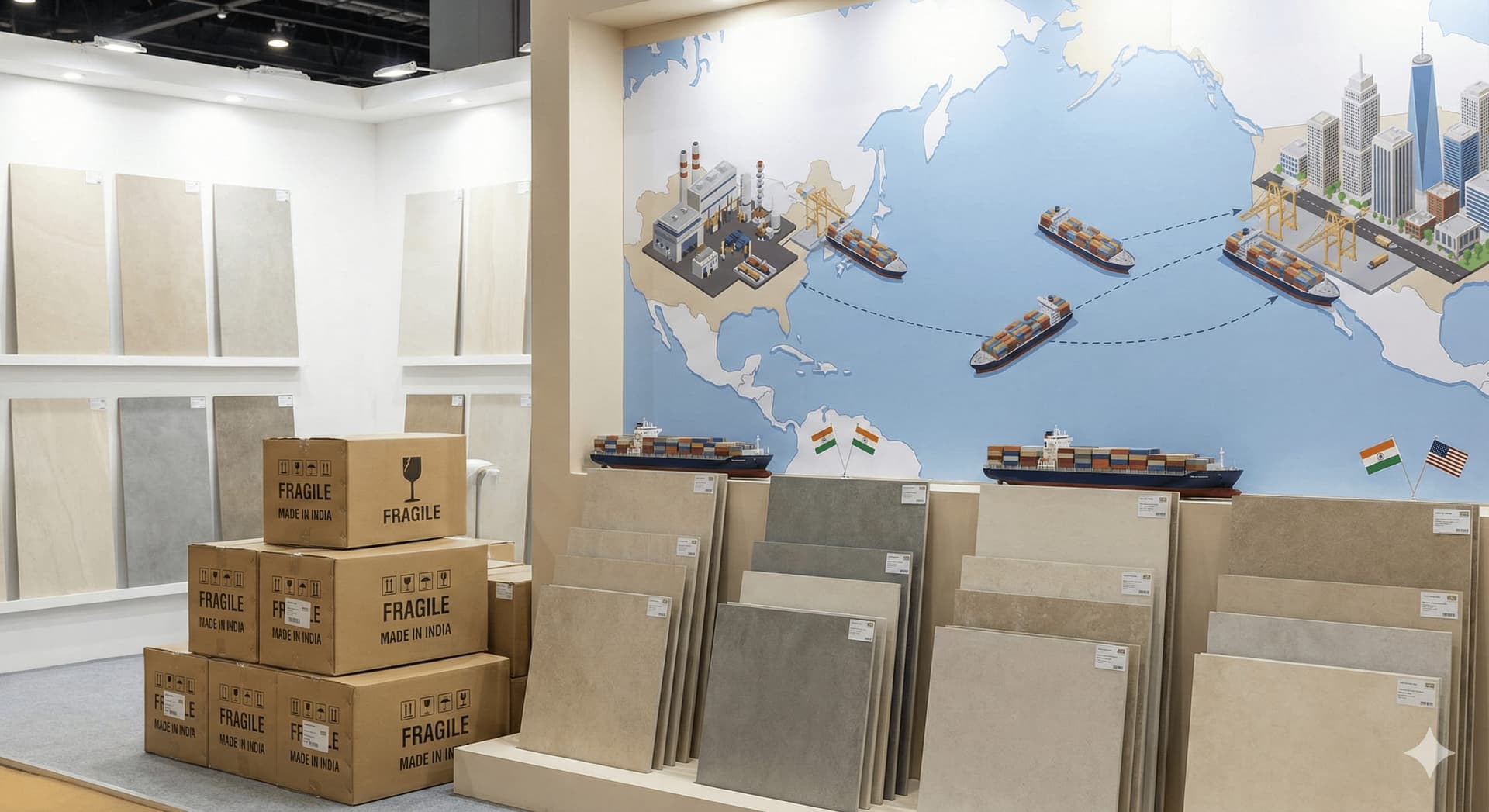
Trade agreements rarely make headlines in showrooms—but they quietly rewrite sourcing strategies.
The evolving India–USA trade agreement, including recent tariff reductions and cooperation measures, is one such shift. For ceramic tiles—a product category defined by volume, freight costs, and tight margins—these changes can materially influence where US buyers source, how they price, and which partners they prioritize.
This article explains how the India–USA trade agreement can reshape ceramic tile sourcing and what US importers should consider next.
1. Why Trade Agreements Matter in Tile Imports
Ceramic tiles are heavy, fragile, and logistics-intensive. Small changes in duties or procedures can significantly affect total landed cost.
Trade agreements typically impact:
- Import duties
- Customs processes
- Documentation clarity
- Supply-chain predictability
Annotation:
In tile trade, friction reduction can matter as much as price reduction.
2. Landed Cost Economics Shift in India’s Favor
With tariff relief and smoother trade mechanisms, Indian tiles gain an immediate advantage in the US market.
For buyers, this can mean:
- Lower landed cost per square meter
- Improved margin headroom
- More flexible pricing strategies
This advantage applies not only to entry-level products but also to mid-range and premium segments.
3. India’s Manufacturing Scale Becomes Strategic
India already offers strong fundamentals:
- Large production capacity
- Competitive cost structures
- Diverse design capabilities
- Mature export ecosystems
The trade agreement amplifies these strengths, making India a scalable and cost-stable sourcing destination for US buyers planning long-term supply.
Annotation:
Trade policy doesn’t create capacity—it unlocks it.
4. US Buyers Are Actively Diversifying Supply Chains
US importers are reducing dependence on concentrated sourcing regions due to:
- Capacity bottlenecks
- Freight volatility
- Geopolitical uncertainty
India’s multiple manufacturing clusters and exporter networks provide:
- Supply resilience
- Volume flexibility
- Faster scaling during demand spikes
5. Quality and Compliance Remain Non-Negotiable
Lower tariffs do not lower standards.
US buyers continue to expect:
- Consistent sizing and calibration
- Shade and batch control
- Export-grade packing
- Compliance with US regulations
Annotation:
Trade access opens doors; quality keeps them open.
6. Alignment with US Design Preferences
The US market favors:
- Wood-look and stone-look tiles
- Matte and satin finishes
- Larger formats for modern interiors
- Durable surfaces for residential and light-commercial use
Indian manufacturers have increasingly aligned product development with these preferences, often responding faster to design shifts.
7. Growth of Private Label and Retail Programs
The trade agreement strengthens the economics of private label sourcing.
US distributors and retailers benefit from:
- Better cost predictability
- Custom packaging and branding
- Stable SKUs for repeat programs
Annotation:
Private label buyers value reliability more than novelty.
8. Logistics Execution Still Determines Success
Even with trade advantages, execution matters.
US buyers prioritize:
- Predictable lead times
- Strong packing standards
- Accurate documentation
- Clear shipment communication
Export-focused partners and merchant exporters play a crucial role in coordinating these elements across multiple factories.
9. What Indian Exporters Must Do to Capitalize
To fully benefit from the agreement, Indian exporters should:
- Maintain strict quality discipline
- Invest in US-focused collections
- Strengthen compliance and documentation
- Build long-term buyer relationships
Annotation:
Trade agreements attract interest; operational discipline earns loyalty.
10. A Long-Term Realignment, Not a Short-Term Spike
The India–USA trade agreement signals a longer-term realignment rather than a temporary boost.
Over time, it can:
- Increase India’s share in US tile imports
- Encourage longer supply contracts
- Support expansion into higher-value categories
Early movers are best positioned to secure capacity and partnerships.
Final Thought
The India–USA trade agreement doesn’t automatically change sourcing—but it reshapes the decision framework.
For US buyers, India becomes more attractive on cost, scale, and flexibility. For Indian exporters, it’s an opportunity to evolve from transactional suppliers into strategic partners.
In global trade, agreements set the stage.
Execution determines who wins.
Conclusion
The India–USA trade agreement has the potential to reshape ceramic tile sourcing by improving cost competitiveness, reducing trade friction, and strengthening supply-chain resilience. Buyers who adapt early—and exporters who execute reliably—stand to gain lasting advantage in a changing market.