How Importers Reduce Risk When Scaling Tile Imports
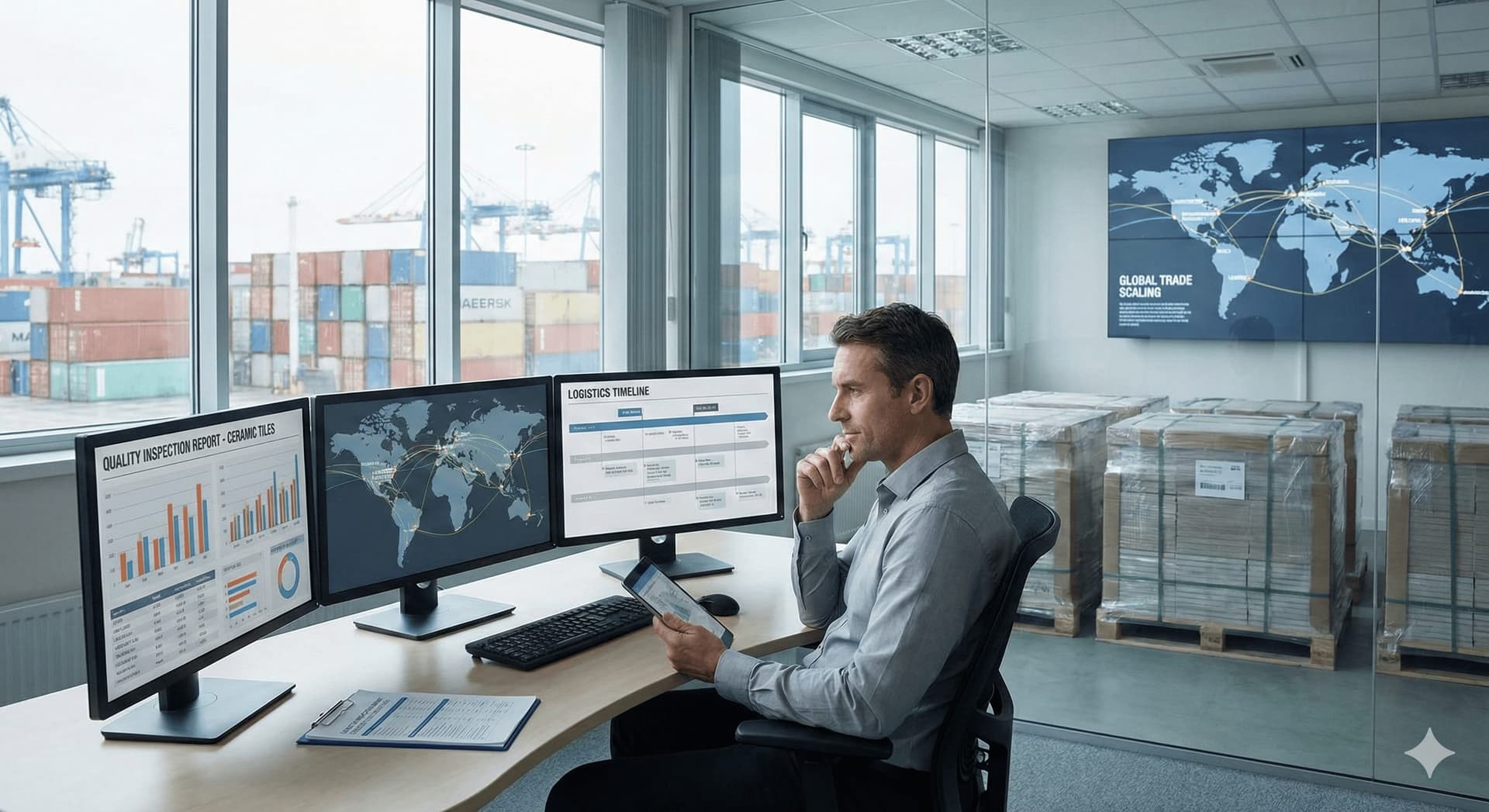
Scaling tile imports is not just about ordering more containers.
It’s about controlling risk while increasing volume.
Many importers handle their first few shipments successfully but face problems when they try to scale—quality variations, delayed deliveries, inventory imbalances, and cash-flow pressure.
Professional importers don’t scale by increasing orders blindly.
They scale by building systems that protect them at higher volumes.
This article explains how experienced importers reduce risk when scaling tile imports and maintain stability as their business grows.
1. They Scale in Stages, Not in Jumps
The biggest mistake importers make is doubling or tripling order size too quickly.
Experienced buyers scale gradually:
- Increase from 1 container to 2–3 containers
- Test repeat consistency
- Expand only after stable performance
Annotation:
Growth without control is not scaling—it’s exposure.
2. They Lock in Quality Systems Before Increasing Volume
At higher volumes, small inconsistencies multiply.
Professional importers ensure:
- Batch and shade consistency systems
- Pre-shipment inspections
- Standardized quality checkpoints
They don’t assume quality will remain stable—they verify it at every stage.
3. They Diversify Supply Sources
Relying on one factory becomes risky at scale.
Importers reduce risk by:
- Working with multiple approved suppliers
- Using merchant exporters for multi-source coordination
- Maintaining backup production options
Annotation:
Supply diversification protects continuity.
4. They Standardize Product SKUs
Too many designs create inventory chaos.
Successful importers:
- Focus on fast-moving designs
- Limit SKUs
- Build repeatable product lines
This improves forecasting, inventory turnover, and purchasing control.
5. They Optimize Container Economics
At scale, freight efficiency becomes a major profit driver.
Importers optimize:
- Boxes per container
- Weight limits
- Pallet vs loose loading
- Freight cost per square meter
Even small improvements significantly increase margin at volume.
6. They Align Payment Terms with Sales Cycles
Scaling increases capital exposure.
Professional importers:
- Negotiate structured payment terms
- Align payment cycles with inventory turnover
- Avoid overcommitting working capital
Annotation:
Cash flow risk grows faster than order volume.
7. They Strengthen Documentation and Compliance Systems
Higher volumes increase the risk of documentation errors.
Importers implement:
- Standard document formats
- Pre-dispatch verification
- Clear compliance checklists
This prevents costly delays at port.
8. They Improve Logistics Visibility
At scale, multiple containers move simultaneously.
Experienced importers track:
- Production schedules
- Container booking timelines
- Vessel movements
- Estimated arrival dates
They avoid surprises by maintaining shipment visibility.
9. They Build Strong Supplier Relationships
Scaling requires cooperation from suppliers.
Importers who grow successfully:
- Communicate forecasts early
- Share sales data
- Plan production jointly
This helps suppliers allocate capacity and maintain consistency.
Annotation:
Scaling is easier when suppliers grow with you.
10. They Plan Inventory and Distribution Carefully
At higher volumes, inventory mistakes become expensive.
Professional importers:
- Forecast demand realistically
- Allocate stock across markets
- Avoid overstocking slow-moving items
They treat inventory as a strategic asset—not just stored product.
11. They Establish Clear Claim and Resolution Systems
At scale, issues are inevitable.
Importers prepare by:
- Defining claim procedures in advance
- Documenting damage or defects quickly
- Working with suppliers who respond professionally
This reduces financial impact when problems occur.
12. They Track Performance Metrics Consistently
Successful scaling is data-driven.
Importers monitor:
- Breakage rate
- Delivery accuracy
- Sales velocity
- Inventory turnover
- Supplier reliability
Annotation:
What gets measured gets controlled.
Final Thought
Scaling tile imports is not about taking bigger risks.
It’s about managing risk more intelligently.
Importers who grow sustainably are those who build systems—quality systems, logistics systems, financial systems, and supplier relationships.
Volume alone does not create success.
Controlled volume does.
Conclusion
Scaling tile imports successfully requires discipline, planning, and system-driven execution. Importers who diversify supply, standardize products, control logistics, and align cash flow with growth protect their margins while expanding their business.
In global trade, growth rewards those who manage risk—not those who ignore it.