How Importers Balance Design Trends with Inventory Risk in Tile Business
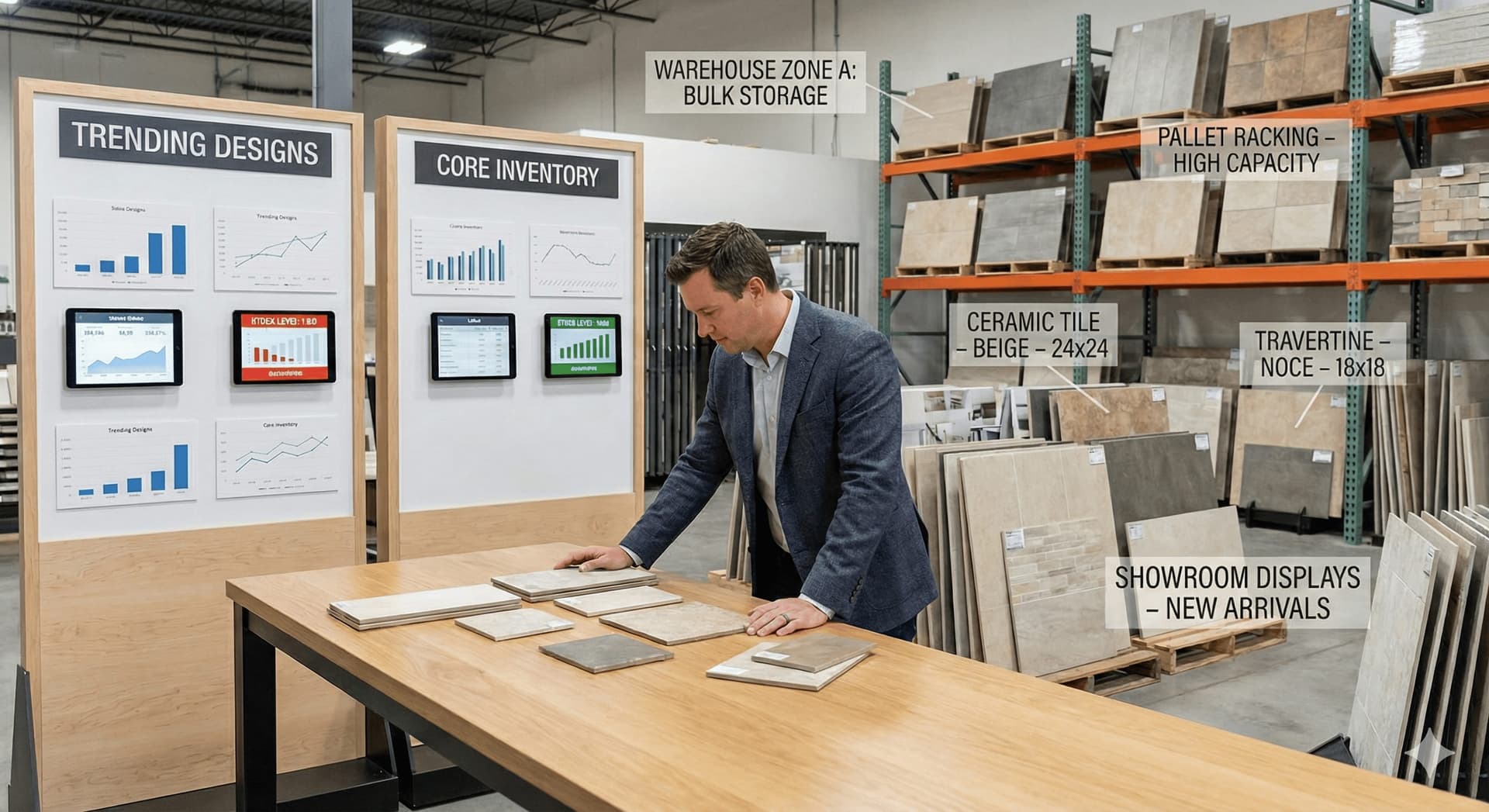
Design trends sell tiles.
Inventory mistakes sink businesses.
In the tile trade, importers constantly walk a tightrope between what is trending and what will actually sell consistently. Chasing trends can boost short-term sales—but overstocking the wrong designs can lock capital, reduce margins, and create long-term losses.
This article explains how professional importers balance design trends with inventory risk to build stable, profitable tile businesses.
1. Understanding the Difference Between Trend and Demand
A trend attracts attention.
Demand sustains sales.
Importers evaluate whether a design is:
- A short-term style spike
- A mid-term design movement
- A long-term market staple
Annotation:
Not every trending design becomes a repeat seller.
2. Maintaining a Core Product Base
Successful importers build their business around core, evergreen SKUs such as:
- Neutral stone-look tiles
- Classic matte finishes
- Standard sizes (600×600 mm, 600×1200 mm)
These products provide:
- Stable sales
- Predictable turnover
- Reliable margins
Trend-driven designs are layered on top—not used as the foundation.
3. Limiting Exposure to New Designs
Experienced buyers do not commit large volumes to untested designs.
They:
- Start with smaller trial quantities
- Observe dealer feedback
- Monitor sales velocity
- Scale only after validation
Annotation:
Testing protects cash flow.
4. Studying Local Market Preferences
Global trends do not translate equally across regions.
Importers analyze:
- Local design tastes
- Price sensitivity
- Climate influence
- Installation practices
A design that sells in Europe may not move in Africa—or vice versa.
5. Balancing Size Mix and Format Risk
Large-format tiles may be trending globally, but they require:
- Skilled installation
- Higher freight cost
- Specific project demand
Importers balance:
- Standard formats for volume sales
- Larger formats for premium segments
6. Using Data to Guide Purchasing Decisions
Professional importers rely on data—not instinct.
They track:
- Monthly sales by design
- Inventory turnover rates
- Dealer reorder frequency
- Seasonal demand patterns
Annotation:
What sells repeatedly is more important than what sells fast once.
7. Managing Inventory Turnover and Stock Levels
Inventory risk increases with time.
Importers control exposure by:
- Setting maximum stock levels per SKU
- Clearing slow-moving designs early
- Avoiding over-ordering on first purchase
They treat inventory as a financial asset, not just physical stock.
8. Coordinating with Suppliers on Design Cycles
Design trends evolve quickly.
Importers work with suppliers who:
- Update collections regularly
- Offer repeatable designs
- Maintain availability of proven SKUs
This ensures continuity without overcommitting to short-lived trends.
9. Segmenting Product Lines by Customer Type
Different customers want different things.
Importers segment inventory into:
- Budget segment (volume-driven designs)
- Mid-range segment (design + price balance)
- Premium segment (trend and aesthetic-led)
Annotation:
Mixing segments without structure creates confusion and dead stock.
10. Pricing Strategy Supports Inventory Strategy
Trending designs often carry higher perceived value.
Importers use:
- Higher margins on trend products
- Competitive pricing on core products
This balances profitability while managing sales speed.
11. Watching Installation Feedback
Installers often influence repeat demand.
Importers track:
- Ease of installation
- Alignment issues
- Surface durability
Designs that are difficult to install or maintain tend to slow down over time.
12. Planning Exit Strategies for Slow-Moving Designs
Even the best importers sometimes misjudge a trend.
They plan early exit strategies such as:
- Discount campaigns
- Bundle offers
- Market redistribution
Annotation:
Holding unsold stock is more expensive than selling at a lower margin.
Final Thought
In the tile business, success is not about choosing the most beautiful design.
It’s about choosing the right balance between beauty and repeat demand.
Professional importers don’t chase trends—they manage them.
They build a stable core, test new designs carefully, and adjust inventory based on real market response.
Conclusion
Balancing design trends with inventory risk is one of the most important skills in tile importing. Buyers who combine market insight, disciplined purchasing, and supplier coordination build sustainable, profitable operations.
In tile trade, the right design attracts customers.
The right inventory strategy keeps the business alive.