How Africa Can Become the Biggest Business Partner for India’s Ceramic Tile Industry
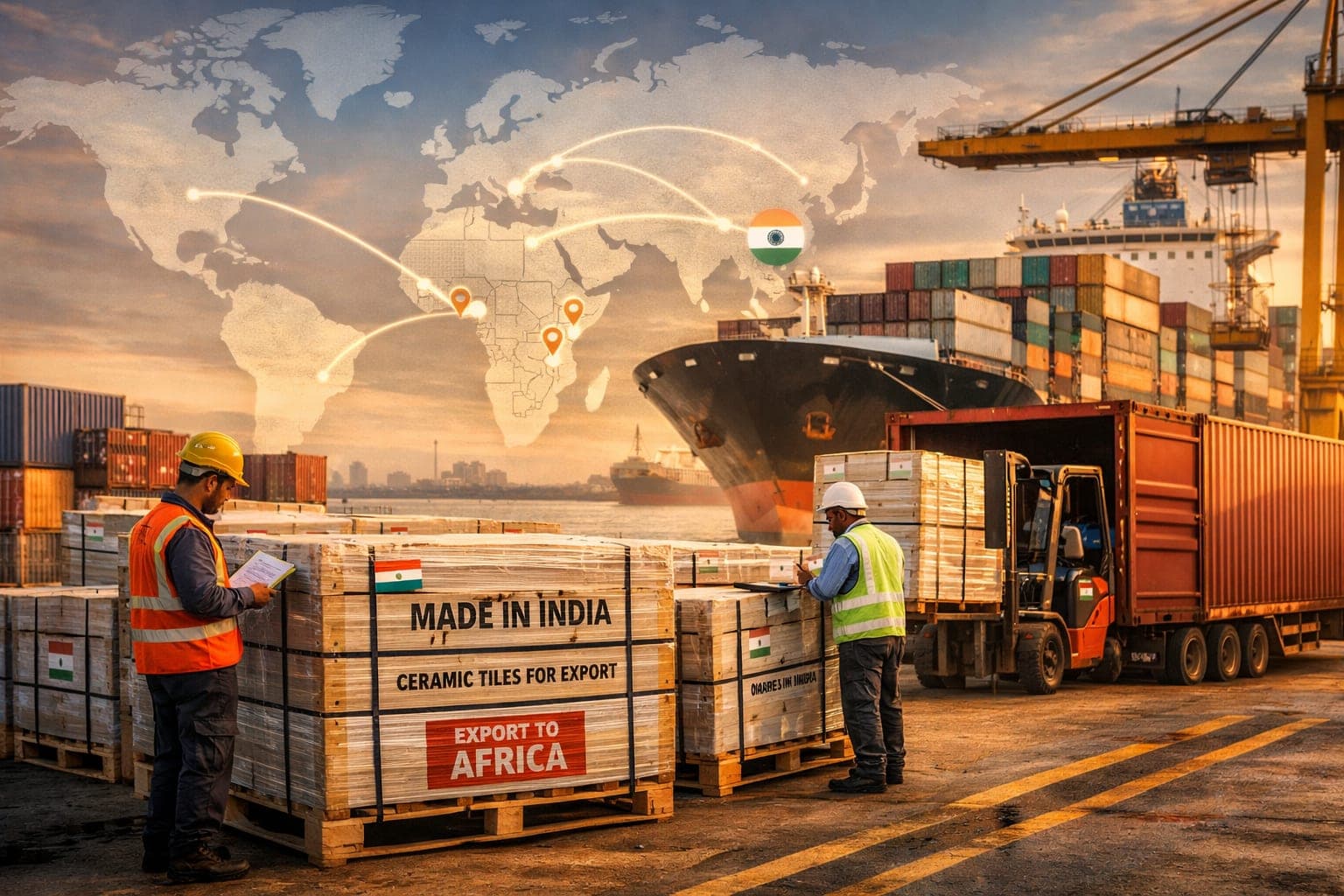
Global trade often follows an interesting rule: markets grow fastest where infrastructure is still being built. By this logic, Africa represents one of the most promising frontiers for India’s ceramic tile export industry.
With rapid urbanization, a young population, and increasing construction activity, the African continent has the potential to become India’s largest long-term trading partner for ceramic tiles.
Let’s explore the economic, demographic, and strategic reasons behind this opportunity.
Africa’s Construction Boom
Africa is currently experiencing a major wave of urban development.
Many countries across the continent are investing heavily in:
- Housing projects
- Commercial buildings
- Infrastructure development
- Hospitality and tourism facilities
Annotation:
Urbanization refers to the shift of population from rural areas to cities, increasing demand for housing and construction materials.
As cities expand, the demand for building materials—including ceramic tiles—grows rapidly.
A Rapidly Growing Population
Africa is one of the fastest-growing regions in the world.
By 2050, the continent is expected to have over 2.5 billion people. A large portion of this population will be young and urban.
More people means more demand for:
- Homes
- Apartments
- Offices
- Public infrastructure
Each of these projects requires flooring and wall materials, making ceramic tiles a core construction component.
Limited Local Manufacturing Capacity
While demand for tiles is rising, many African countries still lack strong local manufacturing capacity.
This creates a supply gap that imports must fill.
Annotation:
Supply gap occurs when local production cannot meet market demand.
As a result, many African markets rely heavily on imported tiles from countries such as:
- India
- China
- Turkey
- Spain
This import dependence creates long-term export opportunities.
India’s Strategic Advantage
India, particularly the Morbi ceramic cluster in Gujarat, has emerged as one of the world’s largest tile production hubs.
Annotation:
Morbi Cluster: A major ceramic manufacturing region in Gujarat that produces a large share of India’s ceramic tiles.
India offers several advantages that align well with African market needs.
Competitive Pricing
Indian tiles are often more affordable than European products while maintaining acceptable quality standards.
For price-sensitive African markets, this balance is crucial.
Wide Product Range
Indian exporters provide a broad selection of sizes and finishes, including:
- 600×600 mm
- 600×1200 mm
- Wall tiles
- Porcelain slabs
This variety allows importers to serve different customer segments.
Geographic Proximity
Compared to suppliers from Europe or South America, India is relatively closer to Africa.
Shorter distance means:
- Lower freight cost
- Faster delivery
- More reliable supply chains
Rising Demand for Affordable Premium Designs
African real estate markets are evolving.
Consumers increasingly prefer:
- Marble-look tiles
- Large-format designs
- Modern textures
Indian manufacturers have become highly competitive in digital printing technology, allowing them to produce premium-looking tiles at affordable prices.
This combination is ideal for emerging markets.
Expanding Trade Relationships
India has been strengthening diplomatic and economic relationships with African countries.
Trade agreements, business forums, and export promotion programs are improving market access.
Annotation:
Bilateral Trade: Trade conducted directly between two countries.
Such partnerships encourage smoother trade and logistics between Indian exporters and African importers.
Logistics and Port Connectivity
Many African ports are now expanding to handle increased cargo volumes.
Major trade gateways include:
- Mombasa (Kenya)
- Lagos (Nigeria)
- Tema (Ghana)
- Durban (South Africa)
Improved port infrastructure makes importing construction materials easier and faster.
Opportunities for Indian Exporters
Africa offers multiple business opportunities for ceramic tile exporters:
Distribution Partnerships
Local distributors play a crucial role in reaching retailers and construction projects.
Project Supply
Large infrastructure and housing developments require bulk tile supply.
Brand Building
African markets are still developing strong brand preferences, offering opportunities for exporters to establish recognition.
Market Expansion
Exporters can diversify across several countries instead of depending on a single market.
Challenges to Consider
While Africa presents strong potential, exporters must also understand the challenges.
Market Diversity
Africa is not a single market—it is a continent with more than 50 countries, each with different regulations and demand patterns.
Payment Risk
Some markets require careful credit management and secure payment methods.
Logistics Complexity
Transport infrastructure varies widely between countries.
Understanding local market conditions is essential for success.
The Long-Term Outlook
The combination of:
- Population growth
- Urban expansion
- Rising construction demand
- Limited local production
creates a powerful opportunity for India’s ceramic tile industry.
Key Insight:
Africa’s demand trajectory aligns perfectly with India’s production capacity.
If Indian exporters build strong relationships, reliable distribution networks, and market-focused product strategies, the African continent could become one of India’s most important ceramic tile export destinations.
Final Thought
Trade partnerships are rarely built overnight. They grow through consistent supply, trust, and long-term collaboration.
Africa’s development story is still unfolding, and construction materials will play a vital role in shaping its cities and infrastructure.
For India’s ceramic tile exporters, the opportunity is clear:
Africa is not just a market—it is a future growth engine.
Those who enter early, understand the market, and build strong partnerships will be best positioned to benefit from the continent’s rising demand.