Gas Shortage, War, and the Ceramic Tile Industry: What Is the Real Cost to the Economy?
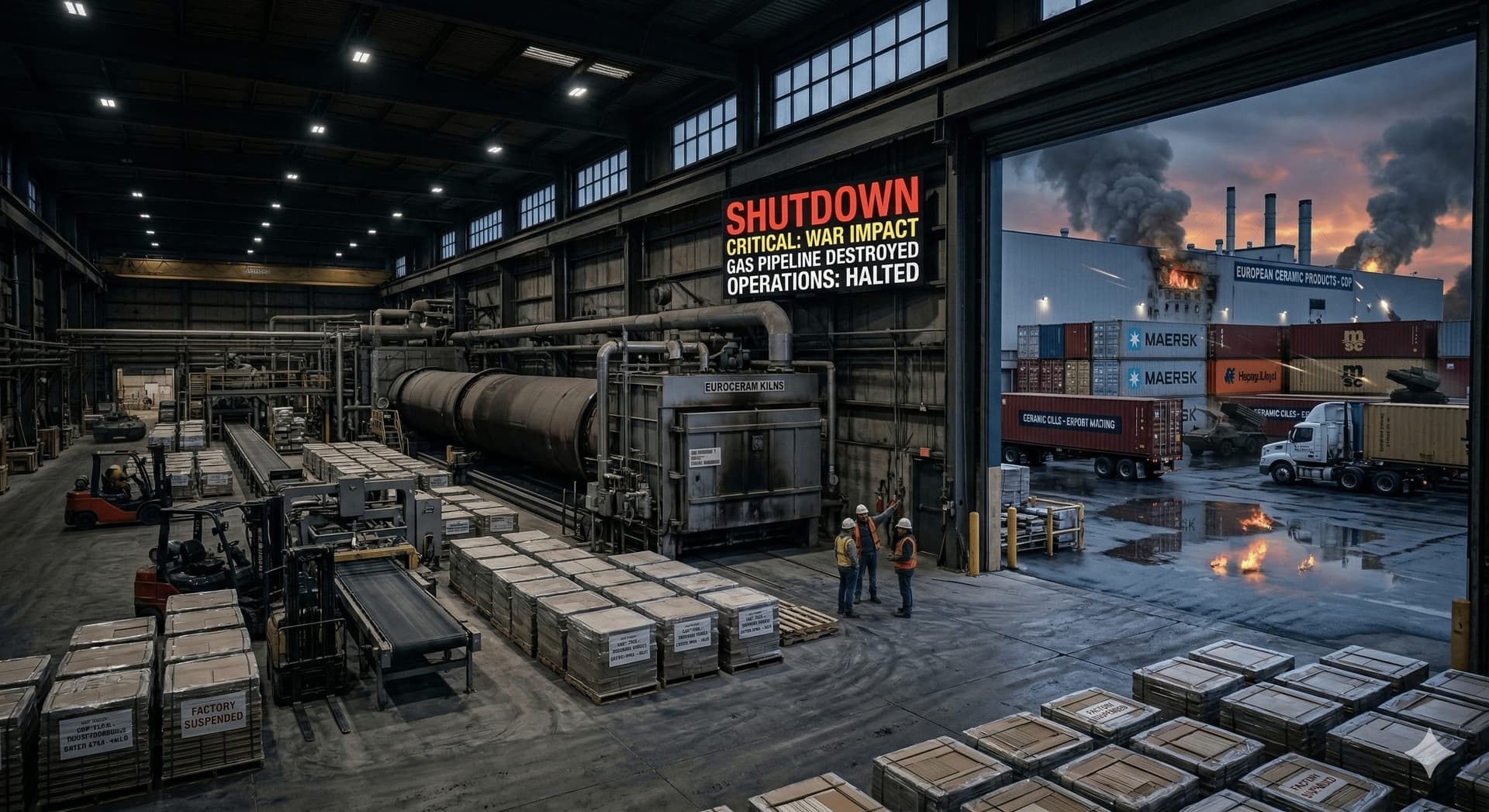
Modern industries are tightly connected to global energy systems. When geopolitical conflicts disrupt energy supply—especially natural gas—the consequences ripple through multiple sectors. One of the industries most sensitive to energy disruption is ceramic tile manufacturing.
If gas shortages force ceramic tile manufacturing units to shut down, the impact goes far beyond the factory floor. It can affect exports, employment, construction, and national economic activity.
The key question becomes: How much does such a disruption actually cost the economy?
Why Gas Is the Lifeline of Ceramic Tile Manufacturing
Ceramic tiles are produced through a high-temperature process where raw materials are fired inside large industrial furnaces called kilns.
Annotation:
Kiln – A high-temperature industrial furnace used to harden ceramic materials by heating them above 1000–1200°C.
Natural gas is widely used in tile manufacturing because it provides:
- Consistent heat control
- Efficient combustion
- Lower emissions compared to coal or other fuels
If gas supply becomes unstable or expensive due to geopolitical conflicts or war-related disruptions, manufacturers may be forced to reduce or halt production.
The Production Loss Factor
The most immediate economic impact is loss of industrial output.
When factories shut down due to energy shortages:
- Daily production stops
- Export orders get delayed
- Revenue streams collapse temporarily
Even short-term shutdowns can lead to significant financial losses because ceramic production lines operate continuously.
Annotation:
Industrial Output refers to the total value of goods produced by manufacturing industries.
Reduced output directly affects national manufacturing performance.
Export Revenue Decline
Ceramic tiles are a major export product for several manufacturing hubs around the world.
If factories cannot operate due to gas shortages:
- Export volumes decline
- International buyers look for alternative suppliers
- Market share may shift to competing countries
Loss of export orders means foreign exchange earnings decrease, which affects the country’s trade balance.
Annotation:
Foreign Exchange Earnings are revenues a country receives from exporting goods or services internationally.
Employment and Livelihood Impact
Ceramic tile clusters typically employ thousands of workers across different stages of production and logistics.
These include:
- Factory workers
- Packaging labor
- Transport operators
- Export logistics teams
If production slows or factories shut down, employment opportunities decline and local economic activity weakens.
The effect spreads across the entire ecosystem surrounding manufacturing hubs.
Supply Chain Ripple Effects
Tile manufacturing is connected to many supporting industries, including:
- Raw material suppliers
- Packaging manufacturers
- Transport companies
- Port logistics operators
When production halts, these industries also experience reduced demand.
Annotation:
Supply Chain Ripple Effect occurs when disruption in one sector causes cascading impacts across related industries.
This multiplies the economic cost of the disruption.
Construction Industry Impact
Ceramic tiles are widely used in:
- Residential housing
- Commercial real estate
- Hospitality infrastructure
- Renovation and interior projects
If supply decreases due to manufacturing shutdowns:
- Construction projects may face delays
- Building costs may increase
- Developers may search for alternative materials
This can slow down real estate development and infrastructure progress.
Price Inflation in the Market
When production declines but demand remains stable, prices often rise.
Reduced supply of tiles may lead to:
- Increased tile prices globally
- Higher construction costs
- Increased cost for homeowners and developers
Economic Principle:
When supply decreases and demand remains stable, prices generally increase.
This inflationary pressure spreads across the construction ecosystem.
Energy Shock and Industrial Competitiveness
Energy shortages not only affect production but also influence global competitiveness.
Countries with stable and affordable energy supply gain an advantage because their industries can continue operating smoothly.
Meanwhile, regions facing gas shortages may lose export opportunities temporarily.
Over time, this can lead to shifts in global manufacturing leadership.
Estimating the Broader Economic Cost
The true cost of industrial shutdown due to energy shortages includes multiple layers:
- Lost manufacturing output
- Declining export revenue
- Job losses or reduced income
- Supply chain disruption
- Increased construction costs
- Reduced investor confidence
When combined, these factors can create significant economic pressure on regional and national economies.
Although exact numbers vary depending on the scale of shutdown, the overall economic impact can reach millions or even billions in lost economic activity.
Long-Term Industry Adjustments
Energy disruptions often push industries to innovate.
Manufacturers may begin exploring:
- Energy-efficient kiln technologies
- Alternative fuel sources
- Hybrid energy systems
- Improved production planning
These adaptations help industries reduce vulnerability to future energy shocks.
Final Thought
War and geopolitical tensions often appear distant from everyday industries, but their economic consequences travel far beyond the battlefield.
When energy supply becomes unstable, industries that rely heavily on fuel—like ceramic tile manufacturing—can face serious disruptions.
The shutdown of tile manufacturing units due to gas shortages is not just an industrial issue. It represents a broader economic challenge affecting exports, employment, construction, and global trade stability.
Understanding these connections reminds us that in today’s interconnected world, energy security and economic stability are deeply intertwined.