From Factory Floor to Project Site: The Real Tile Supply Chain Explained
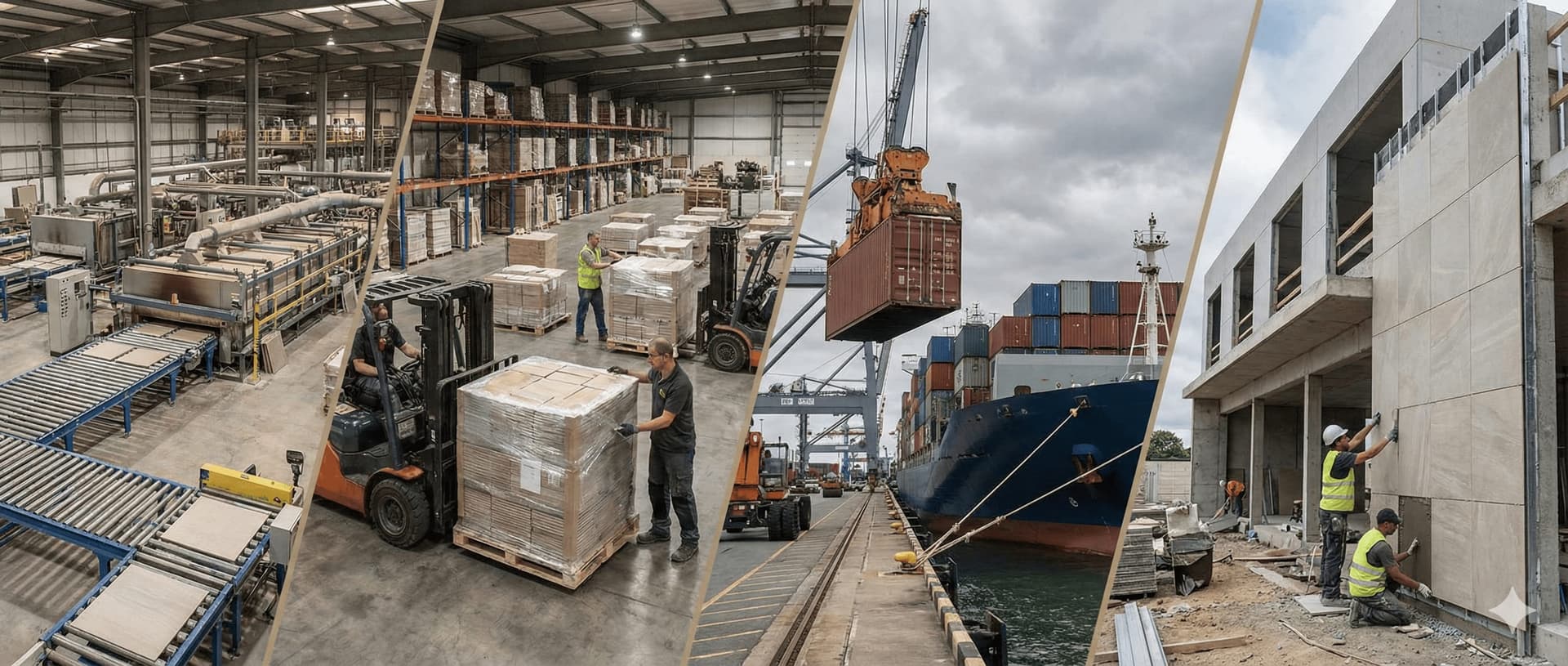
Ceramic tiles travel farther than most people realize.
What starts as raw material in a factory often ends up installed in homes, hotels, offices, and infrastructure projects thousands of kilometers away. Between these two points lies a complex supply chain where small mistakes can create large losses.
For professional importers and project buyers, understanding the real tile supply chain is not optional—it is essential for controlling cost, quality, and timelines.
This article explains each stage of the ceramic tile supply chain, from factory floor to project site, and highlights where risks typically arise and how experienced players manage them.
1. Raw Materials and Manufacturing
The supply chain begins with raw materials such as clay, feldspar, and silica.
These materials are processed, shaped, fired, and finished through controlled manufacturing stages. Tile quality is largely determined here—long before packing or shipping begins.
Key manufacturing factors include:
- Raw material consistency
- Firing temperature control
- Surface finish and calibration accuracy
Annotation:
Issues created during manufacturing cannot be corrected later in the supply chain.
2. Quality Control at Production Level
Professional exporters and buyers focus heavily on in-process quality control.
This includes:
- Dimensional accuracy checks
- Surface defect inspection
- Shade and batch identification
- Performance testing where required
Skipping or rushing quality checks at this stage increases the risk of disputes after shipment.
Annotation:
Early quality control is cheaper than post-arrival correction.
3. Batch Planning and Order Consolidation
Once tiles are produced, they are organized batch-wise based on shade, caliber, and finish.
For export orders—especially project supplies—batch planning is critical to ensure visual consistency across large installations.
Order consolidation involves:
- Matching production batches to order quantities
- Planning container loads accordingly
- Avoiding batch mixing unless approved
4. Export-Grade Packing and Palletization
Packing is where many tile shipments succeed or fail.
Export-grade packing protects tiles against:
- Long transit times
- Container vibration
- Stacking pressure
- Humidity and handling damage
Typical export packing includes strong cartons, palletization, edge protection, and secure strapping.
Annotation:
Good tiles with poor packing often arrive as bad tiles.
5. Container Stuffing and Load Optimization
Container loading is not just about fitting boxes—it is about balance, safety, and compliance.
Proper container stuffing ensures:
- Even weight distribution
- Compliance with weight regulations
- Reduced breakage during transit
Exporters with experience plan container layouts in advance rather than loading randomly.
6. Documentation and Export Clearance
Once the container is sealed, paperwork takes center stage.
Critical documents include:
- Commercial invoice
- Packing list
- Bill of lading
- Certificate of origin
- Test reports if required
Errors at this stage can delay shipments even if the product itself is perfect.
Annotation:
A shipment is cleared by documents before it is cleared by customs.
7. International Transit and Port Handling
During sea transit, tiles face constant vibration, temperature variation, and handling stress.
At destination ports, containers may be:
- Lifted multiple times
- Stored temporarily
- Subjected to inspection
Export-grade packing and correct documentation reduce risks during this phase.
8. Import Clearance and Inland Transport
After arrival, importers handle customs clearance and inland logistics.
Delays can occur due to:
- Documentation mismatches
- Weight discrepancies
- Inspection holds
Once cleared, tiles are transported to warehouses, distribution centers, or directly to project sites.
9. Storage, Distribution, and Site Delivery
The final stages involve storage and delivery to the end location.
Proper handling remains important to avoid:
- Corner damage
- Moisture exposure
- Batch mixing
Project sites often require precise delivery scheduling to align with installation timelines.
Annotation:
The supply chain does not end at the port—it ends at installation.
Why Understanding the Supply Chain Matters
For importers and project buyers, understanding the full tile supply chain helps:
- Reduce hidden costs
- Avoid quality disputes
- Improve planning accuracy
- Build stronger exporter relationships
For exporters, it reinforces the importance of managing every stage—not just manufacturing.
Final Thought
The ceramic tile supply chain is only as strong as its weakest link.
From raw material selection to final delivery, each step affects the success of the shipment and the reputation of everyone involved. Buyers and exporters who understand—and respect—this chain are the ones who consistently succeed in international trade.
Tiles may be manufactured in factories,
but trust is built across the entire supply chain.