Design vs Durability: What Different Markets Really Want
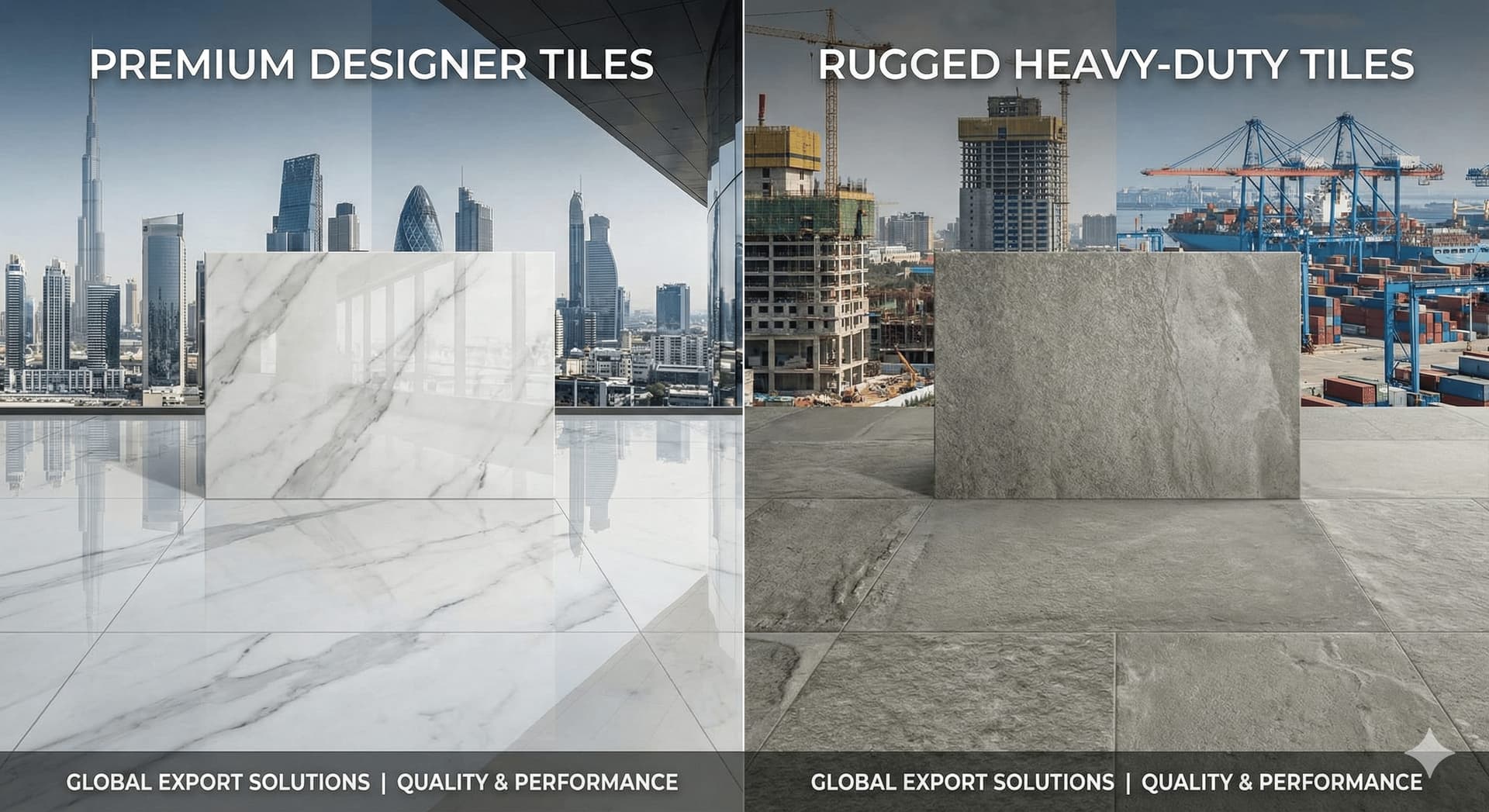
In the global tile trade, one question shapes almost every buying decision:
Should a tile look good—or last long?
The answer depends on the market.
Some regions prioritize visual appeal, premium finishes, and modern aesthetics. Others care more about strength, longevity, and ease of maintenance. Smart buyers don’t argue about which is better—they understand which matters more where.
This article explains how different markets balance design and durability, and how professional buyers use this knowledge to select the right products.
1. Design-Driven Markets: Where Aesthetics Lead
In design-focused regions, tiles are part of interior expression.
These markets look for:
- Unique textures
- Large formats
- Marble and wood looks
- Premium finishes
Where this matters most:
- Western Europe
- Australia
- High-end segments of the Middle East
- North America
Buyers in these regions often treat tiles as lifestyle products rather than basic construction materials.
Annotation:
In design-driven markets, visual inconsistency damages brand value quickly.
2. Durability-Driven Markets: Where Performance Wins
In many regions, tiles are chosen for survival, not style.
These markets demand:
- High breaking strength
- Scratch resistance
- Easy maintenance
- Long service life
Where this matters most:
- Africa
- Southeast Asia
- Infrastructure-heavy economies
- Public housing segments
Annotation:
In these markets, failure after installation is unacceptable—even if the tile looked good.
3. Climate Influences Preference
Climate plays a huge role in tile selection.
Hot, humid regions prefer:
- Light colors
- Cool-touch surfaces
- Anti-slip finishes
Cold regions prefer:
- Warmer tones
- Natural textures
- Stone or wood aesthetics
Annotation:
Climate affects not just comfort, but also wear and tear.
4. Residential vs Commercial Demand
Residential buyers often prioritize design.
Commercial buyers prioritize durability.
Residential projects seek:
- Visual harmony
- Trend-driven designs
- Lifestyle appeal
Commercial projects seek:
- High foot-traffic resistance
- Safety features
- Easy cleaning
Annotation:
A mall floor has very different needs than a living room.
5. Price Sensitivity Shapes the Choice
In price-sensitive markets, durability often outweighs design.
Buyers prefer:
- Standard sizes
- Neutral finishes
- Proven performance
In higher-income markets, buyers are willing to pay for:
- Unique visuals
- Special textures
- Designer collections
6. Installation Practices Matter
Some markets have advanced installation standards.
Others rely on basic methods.
Fragile, premium tiles require skilled handling.
Durable tiles tolerate rougher conditions.
Annotation:
The best-looking tile fails if it’s installed poorly.
7. What Professional Buyers Really Do
Smart buyers don’t choose between design and durability.
They match the balance to the market.
They ask:
- Who is the end user?
- How long should the tile last?
- What environment will it face?
- How will it be maintained?
Then they select accordingly.
8. Mistakes That Cost Buyers Money
Here’s where buyers go wrong:
- Sending premium designs to price-driven markets
- Sending heavy-duty tiles to luxury projects
- Ignoring climate and usage conditions
Annotation:
Wrong product-market fit creates dead stock.
9. Why Exporters Must Understand This Balance
Exporters who understand these differences become advisors—not just suppliers.
They:
- Recommend the right tile for each market
- Prevent misaligned shipments
- Build long-term trust
Final Thought
Design attracts attention.
Durability builds reputation.
Different markets value different things—and success lies in knowing which one matters more where.
Smart buyers don’t choose tiles.
They choose fit.
Conclusion
In global tile trade, there is no universal “best” tile—only the best tile for a specific market. Buyers who understand how design and durability priorities shift across regions reduce risk, improve sell-through, and protect margins.
The right balance doesn’t just sell.
It scales.