Ceramic Tile Demand in Africa: What Importers Should Know
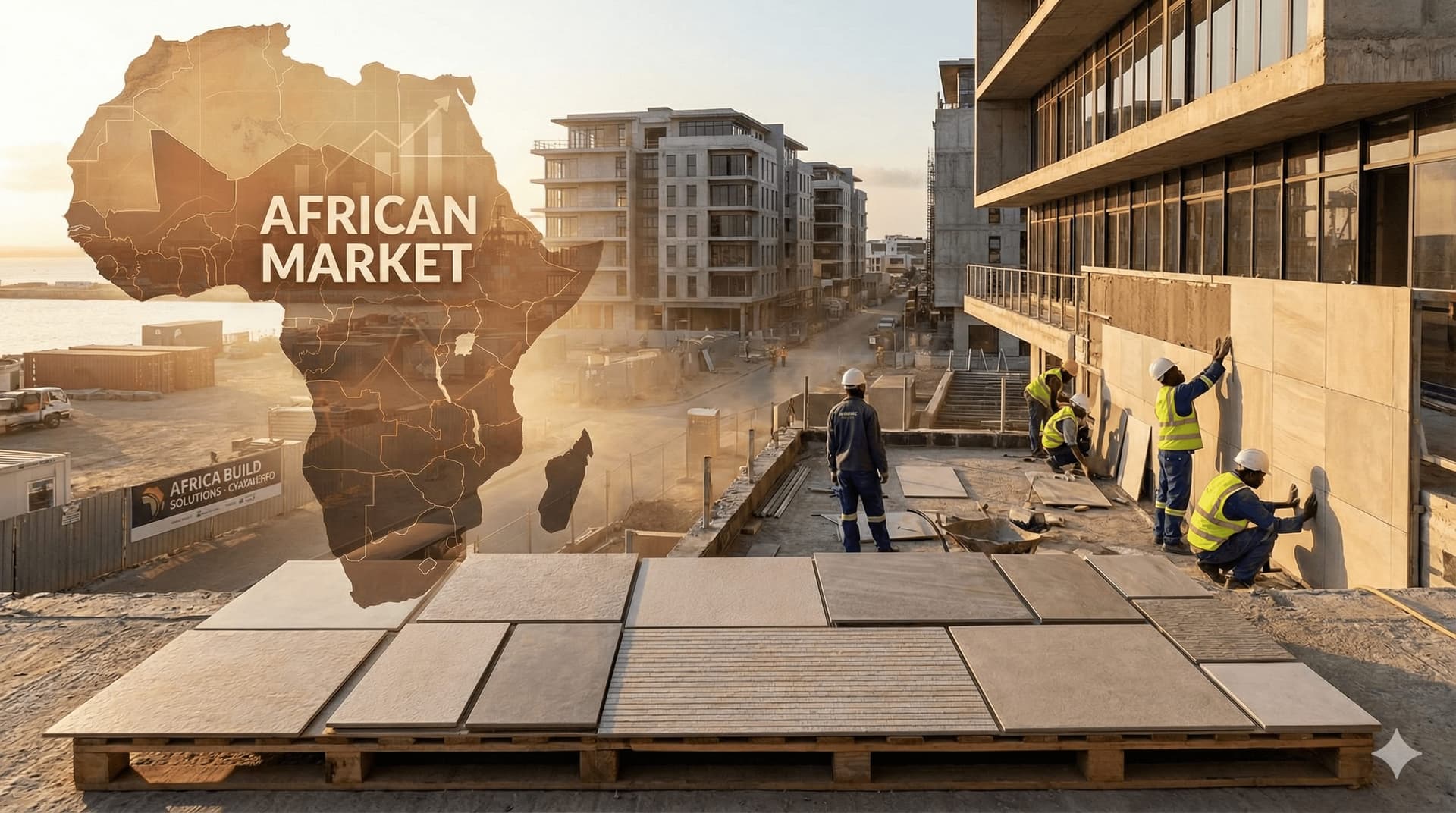
Africa is one of the fastest-growing construction markets in the world. Rapid urbanization, population growth, and government-led infrastructure projects are reshaping cities across the continent. As housing, commercial spaces, and public facilities expand, so does the demand for durable and affordable building materials—especially ceramic tiles.
For international exporters and regional distributors, Africa represents not just a growing market, but a strategically important one.
This article explains why ceramic tile demand in Africa is rising, what importers should understand before entering the market, and how sourcing strategies must adapt to regional realities.
1. Why Ceramic Tile Demand Is Rising in Africa
Africa’s urban population is increasing faster than any other region. Millions of new housing units are needed annually, along with schools, hospitals, shopping centers, and transport hubs.
Ceramic tiles are preferred because they are:
- Cost-effective
- Durable
- Easy to maintain
- Suitable for warm climates
Annotation:
In many African markets, tile purchases are driven more by practicality than luxury.
2. Import Dependency in Most African Markets
Local tile manufacturing capacity remains limited in many African countries. As a result, imports play a major role in meeting demand.
Major importing countries include:
- Nigeria
- Kenya
- Ghana
- Tanzania
- Senegal
- South Africa
These markets rely heavily on international suppliers for consistent quality and volume.
3. Price Sensitivity and Value-Based Buying
African buyers are highly price-sensitive, but this does not mean they compromise entirely on quality.
Importers focus on:
- Competitive pricing
- Low breakage risk
- Functional durability
- Reliable delivery
Annotation:
The lowest-priced tile often loses relevance if it breaks in transit or arrives late.
4. Preference for Practical Designs
In most African markets, demand is stronger for:
- Neutral colors
- Stone-look and marble-look finishes
- Medium-size formats
- Matte or semi-polished surfaces
Luxury finishes exist, but volume demand remains in the practical and affordable category.
5. Infrastructure and Public Projects Drive Volume
Government-funded housing programs, hospitals, and educational institutions are major demand drivers.
These projects require:
- Large volumes
- Uniform shades
- Reliable timelines
- Predictable pricing
Annotation:
Public sector projects penalize inconsistency more than design flaws.
6. Logistics Challenges and Their Impact
African ports often experience congestion, limited handling infrastructure, and longer clearance timelines.
This makes:
- Export-grade packing
- Accurate documentation
- Proper container loading
absolutely essential.
Poor packing or paperwork can cause extended delays and additional port costs.
7. Importance of Strong Packing Standards
Long transit times and rough handling conditions make packing a critical success factor.
Successful importers prioritize:
- Thick cartons
- Palletized loading
- Edge protection
- Moisture-resistant wrapping
Annotation:
In African markets, packing is not optional—it is a survival requirement.
8. Payment Terms and Commercial Risk
Many African buyers prefer flexible payment structures due to cash-flow constraints.
Exporters entering this market must:
- Understand local business norms
- Work with secure payment mechanisms
- Partner with reliable importers
Trust-building plays a larger role here than in many mature markets.
9. Why Exporters Must Adapt Their Strategy
Africa is not a single market—it is a collection of diverse economies with different logistics, preferences, and regulations.
Successful exporters:
- Offer standardized, high-demand designs
- Focus on cost-efficiency
- Simplify SKUs
- Build long-term distributor relationships
10. Long-Term Opportunity Outlook
Africa’s construction growth is not a short-term trend—it is structural.
As incomes rise and urban centers expand, demand will gradually shift toward better finishes, larger formats, and branded products.
Exporters who enter early, understand local needs, and invest in relationships will benefit the most.
Final Thought
Ceramic tile demand in Africa is driven by growth, necessity, and infrastructure—not luxury.
Importers who understand local price sensitivity, logistics challenges, and volume-driven purchasing patterns build stronger businesses. Exporters who adapt their product mix, packing standards, and communication style gain long-term advantage.
Africa is not just a growing market.
It is a market that rewards patience, planning, and consistency.